An above ground deck can turn unused backyard space into a functional outdoor living area without the cost and complexity of extensive excavation or foundation work. Whether the property has a sloped yard, the homeowner wants to avoid disturbing tree roots, or budget constraints rule out ground-level construction, an elevated deck offers flexibility and visual impact. Modern designs range from simple single-level platforms to elaborate multi-story structures with integrated features. The key is matching the deck’s height, materials, and layout to the home’s architecture, terrain, and intended use while staying within local building code requirements.
Key Takeaways
- Above ground deck ideas solve specific site challenges like sloped yards, poor drainage, and high water tables while offering better views and faster construction than ground-level patios.
- Multi-level above ground decks with 12- to 18-inch height differences create distinct zones and add architectural interest without requiring extensive site preparation.
- Pressure-treated lumber remains the most budget-friendly framing option at $2 to $4 per square foot, while composite and PVC decking offer low-maintenance alternatives at higher costs.
- Cables, horizontal slats, and glass panels provide modern railing solutions that balance code compliance, privacy, and visual aesthetics for elevated decks.
- Built-in features like bench seating, pergolas, integrated planters, and low-voltage lighting maximize functionality and extend above ground deck use year-round.
- Always verify local building codes before design work, as decks over 30 inches typically require railing, and larger structures may need permits and engineered plans.
Why Choose an Above Ground Deck for Your Home
Above ground decks solve specific site challenges that make ground-level patios impractical or expensive. Sloped lots often require significant grading and retaining walls for a patio, while an elevated deck uses posts of varying heights to create a level surface without moving earth. Properties with high water tables, poor drainage, or heavy clay soil benefit from keeping living space elevated and dry.
Above ground decks are especially common in a variety of modern residential builds across Texas, including barndominiums in Austin Texas, where open floor plans and outdoor living spaces are a key part of the design. In these homes, elevated decks help adapt to uneven terrain while extending usable outdoor space year-round.
These decks also provide better sightlines. A raised platform offers views over fences, shrubs, or neighboring properties that a ground-level space can’t match. Homeowners with lake, mountain, or city views maximize that asset with elevation.
From a structural standpoint, above ground decks attach directly to the house ledger board (when properly flashed and bolted), creating a seamless transition from indoor to outdoor space. They’re typically faster to build than ground-level projects since there’s no need for extensive site prep, gravel bases, or paver leveling. But, any deck over 30 inches in height usually requires railing per IRC code, and structures above a certain square footage or height may need permits and engineered plans. Always check local requirements before starting design work.
Multi-Level Above Ground Deck Designs
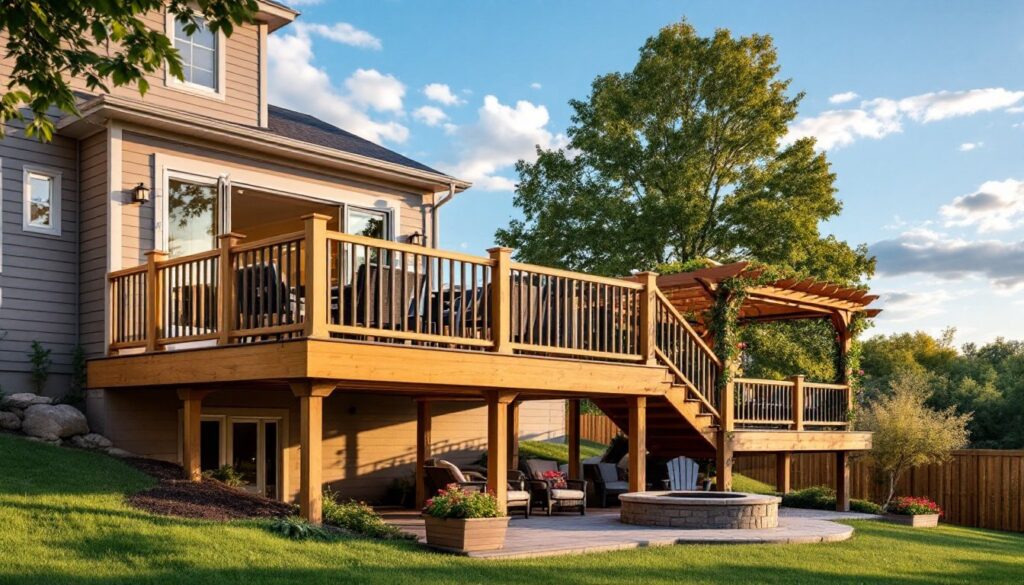
Multi-level decks break up a large footprint into distinct zones, adding architectural interest while accommodating steep slopes or different functional areas. A two-tier design might place a dining area on the upper level near the kitchen door, with stairs leading down to a lower lounge space with a fire pit.
The transition between levels works best with a 12- to 18-inch height difference. Anything less feels awkward: much more becomes a full flight of stairs. Wide, shallow steps (14-inch treads with 6-inch risers) double as casual seating and soften the visual break between tiers.
For dramatic elevation changes, consider a wraparound design that descends the slope in stages, following the home’s footprint. This approach uses the house as a visual anchor and distributes deck loads across multiple footing locations, which can be structurally advantageous on unstable soil.
One practical note: multi-level decks require careful planning for joist direction and beam placement. Each level needs its own support structure, and stairs must land on solid framing, not just decking boards. Factor in the cost of additional posts, concrete footings, and the extra labor for framing multiple platforms. The payoff is a deck that feels custom-designed for the site rather than dropped onto it.
Budget-Friendly Above Ground Deck Ideas
A simple rectangular platform deck attached to the house offers maximum square footage for minimum cost. By skipping built-in seating, pergolas, and fancy railing, homeowners can focus the budget on structural lumber and decking. Pressure-treated southern yellow pine remains the most economical choice, expect to pay roughly $2 to $4 per square foot for materials in most markets, though prices fluctuate.
Keep the deck footprint under 200 square feet to avoid extra permit fees in many jurisdictions. A 12×16 deck provides enough room for a table and chairs without triggering thresholds that require engineered drawings or additional inspections.
Using standard joist spacing (16 inches on center) with 2×8 or 2×10 joists and limiting the span to 10 feet or less reduces the need for oversized beams or extra posts. Straight runs cost less than angled corners or curves, which create more waste and require additional cutting.
For railing, vertical pickets made from the same pressure-treated lumber save money compared to composite or cable systems. Paint or stain the entire deck after construction to extend the wood’s life and give it a finished look without upgrading materials.
Another cost-saver: ground-level framing that technically qualifies as an above ground deck but sits low enough (under 30 inches) to skip railing in some jurisdictions. Verify local codes, this can shave hundreds off the budget while still providing an elevated, well-drained outdoor space.
Above Ground Deck Materials: Choosing the Right Option
Pressure-treated lumber dominates the market for framing and decking due to its rot resistance and affordability. Look for ground-contact rated material (.40 retention) for posts and any framing within 6 inches of soil. Above-ground rated (.25 retention) works for joists and decking. Expect some warping, checking, and splinters, it’s the trade-off for the price.
Composite decking (brands like Trex, TimberTech, Fiberon) costs $4 to $8 per square foot installed but requires no staining and resists fading, mold, and insect damage. It’s heavier than wood, so verify that joist spacing meets the manufacturer’s requirements, many need 12 inches on center instead of the standard 16. Use hidden fasteners for a clean look: face screws on composite show more than on wood.
Cedar and redwood offer natural beauty and rot resistance without chemical treatment. They’re mid-range in cost but require regular sealing to maintain color. Tight-knot cedar boards run $3 to $6 per square foot and work well for visible railing and fascia where appearance matters.
PVC decking is fully synthetic, completely waterproof, and the most expensive option at $6 to $10+ per square foot. It’s best for high-exposure areas (lakefront, coastal) or homeowners who want zero maintenance. It can feel slick when wet and may require textured surfaces for traction.
Framing almost always uses pressure-treated lumber regardless of decking choice, don’t mix species for structural members. Use galvanized or coated fasteners rated for the lumber treatment to prevent corrosion. Stainless steel hardware adds cost but eliminates rust streaks on visible surfaces.
Creative Railing and Privacy Solutions
Cable railing offers unobstructed views and a modern aesthetic. Stainless steel cables run horizontally through posts spaced no more than 4 feet apart, with tension fittings at each end. They meet code (spacing under 4 inches to prevent child passage) but require sturdy posts, cables exert significant lateral force. Kits start around $50 to $80 per linear foot installed.
Horizontal slat railing uses flat boards (1×4 or 1×6) spaced 1 to 2 inches apart for a contemporary look with partial privacy. It’s easier to DIY than cable and costs less. Mount slats to the outside of posts for cleaner lines, but expect more lumber waste from cutting precise lengths.
Glass panel railing provides wind protection and panoramic views but runs $150 to $300 per linear foot. Tempered glass panels fit into aluminum or steel channels bolted to the deck frame. It’s heavy, requires professional installation, and shows every fingerprint, best suited for homes where the view justifies the investment.
For privacy screening, lattice panels attached to the railing or freestanding posts work for under $30 per 4×8 sheet. Stain them to match the deck or paint white for a classic look. Another option: vertical slatted screens that extend above the railing height, creating a wall effect on one or two sides while leaving others open.
Planter boxes integrated into railing caps add greenery and height without a solid wall. Build them from the same material as the deck, line with landscape fabric, and ensure drainage holes. They work well as corner features or to define zones on multi-level decks.
Adding Features and Functionality to Your Above Ground Deck
Built-in bench seating along the perimeter maximizes usable space and eliminates the need for bulky furniture. Frame benches at 16 to 18 inches deep and 18 inches high for comfortable seating. Add a hinged lid to turn seating into weatherproof storage for cushions, tools, or pool supplies.
Pergolas and shade structures define overhead space and support climbing plants or retractable canopies. A simple pergola uses 4×4 or 6×6 posts, 2×6 or 2×8 beams, and 2×4 rafters spaced 12 to 24 inches apart. Anchor posts to the deck frame with galvanized post bases, not just screws through decking. For electrical work (ceiling fans, string lights), hire a licensed electrician, outdoor wiring requires GFCI protection and weatherproof boxes per NEC standards.
Integrated planters bring landscaping onto the deck. Use cedar or composite materials to match the deck, and size them large enough for root growth (minimum 12 inches deep for most perennials). Drill drainage holes and elevate planters slightly on shims to prevent water staining.
Lighting extends deck use into the evening. Post cap lights (solar or low-voltage) mark corners and stairs for safety. Recessed stair lights mount into risers to illuminate treads without protruding. Under-railing strip lights create ambient glow. Low-voltage systems (12V) are DIY-friendly: line voltage requires a pro.
Outdoor kitchens on above ground decks need extra framing support. A grill, sink, and mini-fridge add concentrated weight, plan for 100 pounds per square foot in that zone and double-check joist and beam sizing. Gas lines and plumbing require permits and licensed tradespeople in most areas.
Conclusion
Above ground decks adapt to challenging terrain, expand living space, and increase home value when designed with the site and budget in mind. Focus on solid framing, code-compliant railing, and materials suited to the climate and maintenance preferences. Whether it’s a straightforward platform or a multi-level design with custom features, proper planning and attention to structural details ensure a deck that performs well and looks great for years.