Adding an attached patio cover transforms outdoor living space from a seasonal afterthought into year-round usable square footage. Whether the goal is shade from brutal afternoon sun, protection from sudden downpours, or simply extending the roofline to create a seamless indoor-outdoor flow, the right cover design delivers both function and curb appeal. Unlike freestanding structures, attached covers tie directly into the home’s existing framework, which affects engineering, permits, and aesthetic continuity. This guide breaks down five popular attached patio cover styles and the materials that make them work.
Key Takeaways
- Attached patio cover ideas range from classic gable roofs to modern louvered systems, each offering distinct advantages in weather protection, aesthetics, and maintenance requirements.
- Proper ledger attachment, local permit compliance, and load calculations are critical before installation to avoid fines, insurance issues, and removal orders.
- Material selection—wood, aluminum, or composite—directly impacts durability and maintenance; pressure-treated pine costs $3–$5 per linear foot while premium cedar and aluminum systems demand higher investment.
- Flat and shed roof designs maximize headroom near the house while reducing material costs, but require careful waterproofing at the ledger flashing to prevent leaks.
- Louvered and adjustable patio cover systems offer flexibility with motorized controls and integrated lighting, though they cost $40–$80 per square foot and require electrical and structural permits.
- Pergola-style covers provide partial shade with dappled light and can be enhanced with climbing vines, fabric panels, or polycarbonate sheets for added versatility.
What Is an Attached Patio Cover and Why You Need One
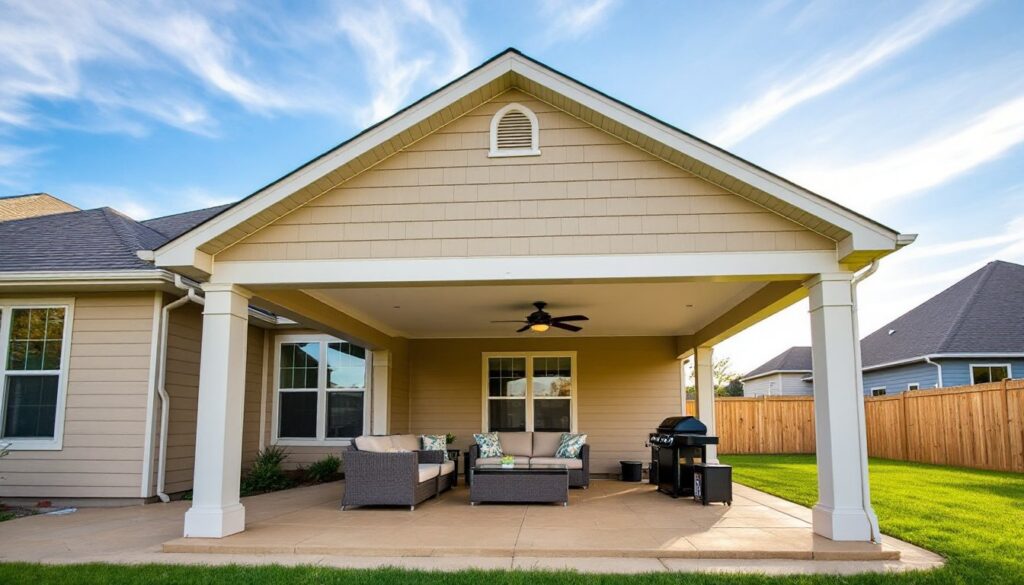
An attached patio cover is a roof structure that extends from the house, typically anchored to the fascia board or an exterior wall via a ledger board. The far end is supported by posts or columns, creating covered outdoor space without requiring a separate foundation-heavy pavilion.
Homeowners choose attached covers for three main reasons: weather protection, expanded usable living area, and increased home value. A well-built cover keeps patio furniture dry, reduces indoor cooling costs by blocking direct sunlight on windows and doors, and provides a defined outdoor room for grilling, dining, or entertaining.
Before breaking ground, confirm local building codes and permit requirements. Most jurisdictions treat attached covers as structural additions, requiring inspections for ledger attachment, footing depth, and load calculations (especially in areas with snow or high wind). The cover must also maintain proper clearances from property lines and easements. Skipping the permit process risks fines, insurance headaches, and removal orders.
Classic Gable Roof Patio Covers for Traditional Appeal
A gable roof cover features a peaked, triangular profile, the same silhouette as most residential roofs. It’s a natural extension for homes with gable or hip roofs, creating visual harmony and strong shedding performance for rain and snow.
Gable covers require a ridge beam running the length of the peak, supported by posts at each end and sometimes midspan if the run exceeds 12 feet. The ledger board attaches to the house at one eave, and the opposing eave rests on the freestanding posts. Roof pitch typically matches the home’s existing slope (commonly 4/12 or 5/12), though steeper pitches improve water runoff in wet climates.
Framing uses 2×6 or 2×8 rafters spaced 16 or 24 inches on center, depending on span tables and snow load. Sheathing and roofing materials should match or complement the main house, asphalt shingles, metal panels, or clay tiles. Ventilation is critical if the cover includes a solid ceiling or soffit: ridge vents and soffit vents prevent moisture buildup.
Gable covers offer the most overhead clearance and best weather protection but demand more lumber and skilled carpentry. Budget for engineering drawings if the span exceeds 16 feet or if the home has brick veneer or stucco (ledger attachment differs for each).
Modern Flat and Shed Roof Designs
Flat roofs (technically low-slope, around 1/4:12 to 1/2:12 pitch) deliver clean, contemporary lines and work especially well on mid-century or minimalist homes. Even though the name, they must slope slightly for drainage, standing water destroys any roofing membrane.
Framing uses 2×8 or larger joists to span the distance without sagging. The ledger attaches high on the wall, and the far beam sits slightly lower to create the slope. Rubber membrane (EPDM), TPO, or PVC roofing are standard top surfaces: modified bitumen or built-up roofing also work. All require careful seam sealing and periodic inspection.
Shed roofs use the same single-slope concept but with steeper pitch, 2/12 to 4/12, allowing for shingles or metal panels. The high end attaches to the house, and the low end rests on posts, creating a slanted profile that sheds water efficiently without the complexity of a gable.
Both flat and shed designs maximize headroom near the house while keeping the far edge lower, reducing material costs and visual bulk. They’re faster to frame than gables but require diligent waterproofing at the ledger flashing to prevent leaks into the home’s wall cavity.
Pergola-Style Attached Covers for Partial Shade
Pergola-style covers use widely spaced beams and rafters (or purlins) to create dappled shade without full weather protection. They’re ideal for climates with mild rain, or where homeowners want sunlight and ventilation but relief from direct overhead glare.
Standard construction involves a ledger board bolted to the house, perpendicular beams spanning to posts, and parallel rafters laid across the beams at 12- to 24-inch spacing. Rafter ends can be cut with decorative profiles or left square for a modern look. Beam sizes depend on span: 2×8 beams work for 8- to 10-foot runs: 2×10 or 2×12 for longer spans.
Material options include pressure-treated lumber, cedar, redwood, or engineered composite beams. Untreated wood weathers to gray unless sealed annually with UV-protective stain.
For added shade, homeowners layer in climbing vines (wisteria, grapevines), outdoor fabric panels, or polycarbonate sheets laid across the rafters. Retractable canopy systems also retrofit onto pergola frames. This hybrid approach offers flexibility, full sun when desired, coverage when needed.
Pergola covers are often simpler to permit than solid-roof structures, though ledger attachment and post footings still require inspection in most areas.
Louvered and Adjustable Patio Cover Systems
Louvered roof systems feature rotating aluminum slats that pivot from fully open to fully closed, controlled by a hand crank or motorized actuator. When closed, the slats interlock to form a watertight barrier: when open, they allow sunlight and airflow.
These systems mount via a ledger and sit on posts or a freestanding frame. Popular brands include Equinox, StruXure, and Apollo, all engineered for specific wind and snow ratings. Installation typically requires professional fitting, as the track and motor housing must be precisely aligned and electrically wired (for motorized versions).
Louvered covers cost significantly more than traditional framed roofs, $40 to $80 per square foot installed, depending on automation and finish. But, they eliminate the need to choose between shade and sun. Integrated LED lighting and rain sensors are common upgrades.
Adjustable systems work best in variable climates where weather and preferences shift daily. They also suit homes with strict HOA design guidelines, as the low-profile aluminum blends with modern and traditional architecture. Maintenance is minimal: rinse debris from tracks quarterly and lubricate pivot points annually.
Note that louvered systems require electrical permits if motorized and may need structural approval for wind load calculations.
Material Choices: Wood, Aluminum, and Composite Options
Material selection impacts durability, maintenance, cost, and aesthetics. The three most common categories are wood, aluminum, and composite.
Wood remains the traditional choice. Pressure-treated southern yellow pine is budget-friendly and widely available but requires sealing every 2–3 years to prevent rot and splintering. Cedar and redwood offer natural rot resistance and rich color, though both fade to gray unless maintained with oil-based stain. Expect to pay $8–$15 per linear foot for dimensional cedar versus $3–$5 for treated pine (prices vary by region and grade).
Aluminum covers, especially extruded kits or louvered systems, resist rust, warp, and insects. Factory powder-coat finishes last decades without repainting. Aluminum works well for low-maintenance households but offers less design flexibility than wood for custom brackets or trim. Cost ranges from $12–$25 per square foot for basic pan systems to much higher for engineered louver systems.
Composite materials (wood-fiber blends or PVC) combine wood aesthetics with low upkeep. Brands like TimberTech and Trex offer composite beams and trim that resist fading and splitting. They’re heavier than wood, requiring beefier ledger bolts and post footings. Pricing sits between premium wood and aluminum, $10–$18 per linear foot.
For roofing, polycarbonate panels (corrugated or multiwall) provide translucent coverage, allowing filtered light while blocking UV and rain. Metal roofing (steel or aluminum) is lightweight, fireproof, and pairs well with modern or farmhouse styles. Match fasteners and flashing to the roofing material to avoid galvanic corrosion.
Conclusion
An attached patio cover is more than a backyard upgrade, it’s a structural investment that extends living space and protects against the elements. Whether choosing a classic gable, a sleek shed roof, or a high-tech louvered system, success hinges on proper ledger attachment, code compliance, and material selection suited to climate and maintenance tolerance. Homeowners comfortable with framing can tackle wood pergolas or simple shed roofs: complex gables and motorized systems are best left to licensed contractors. Either way, the result is usable outdoor space that pays dividends in comfort and resale value.