Bedroom blinds do more than cover windows, they control light, improve sleep quality, ensure privacy, and set the visual tone for the entire room. With the right choice, homeowners can block morning sun, reduce energy costs, and add texture or color without a full renovation. But the options can be overwhelming: roller, cellular, Venetian, wood, faux wood, fabric, automated, manual. Each type brings different benefits for light control, insulation, and aesthetics. This guide walks through the most practical and stylish bedroom blind ideas for 2026, covering everything from blackout performance to smart home integration, so readers can make an well-informed choice based on their sleep habits, décor style, and budget.
Key Takeaways
- Bedroom blinds are essential for controlling light, improving sleep quality, ensuring privacy, and reducing energy costs by up to 20% when using cellular (honeycomb) styles.
- Blackout roller blinds and cellular shades block 99% of light, making them ideal for shift workers and light-sensitive sleepers who need complete darkness for quality rest.
- Layering blinds with curtains combines functional light control and privacy with aesthetic design depth, allowing flexibility for both day and night comfort.
- Minimalist bedroom designs benefit from cordless roller blinds or aluminum slats in neutral colors, which maintain clean lines and eliminate visual clutter from dangling cords.
- Natural material blinds like bamboo, woven wood, or faux wood add warmth and texture while complementing various décor styles, from farmhouse to Scandinavian.
- Smart motorized blinds offer ultimate convenience through automated schedules, smartphone control, and voice commands, with retrofit kits available to upgrade existing blinds for $100–$150 per window.
Why Choosing the Right Blinds Matters for Your Bedroom
Bedrooms serve as rest zones, and light intrusion directly impacts sleep cycles. Even small amounts of ambient light from streetlamps or early sunrise can disrupt melatonin production, leading to restless nights. Quality blinds address this by offering true blackout capability when needed, or gentle filtering for those who prefer a softer wake-up.
Beyond sleep, bedroom windows face different privacy challenges depending on home placement. Ground-floor bedrooms near sidewalks need year-round coverage, while upper-floor rooms may only require privacy at night. Blinds offer flexible control, tilt slats for airflow without exposure, or close completely for full seclusion.
Energy efficiency also plays a role. Cellular (honeycomb) blinds trap air in their pockets, providing an insulation layer that reduces heat loss in winter and heat gain in summer. The U.S. Department of Energy notes that cellular shades can cut heating and cooling costs by up to 20% when properly installed. For bedrooms with large windows or poor insulation, this makes a measurable difference on utility bills.
Finally, blinds contribute to the room’s visual flow. Horizontal slats add width perception to narrow rooms: vertical options complement tall windows or sliding doors. Material choice, smooth aluminum, grainy wood, soft fabric, sets the tactile and aesthetic mood alongside bedding and wall color.
Blackout Blinds for Better Sleep and Privacy
For shift workers, light-sensitive sleepers, or anyone facing east-facing windows, blackout roller blinds are the gold standard. These use dense, opaque fabric, often polyester with a foam or rubber backing, that blocks 99% of incoming light. Installation inside the window frame (inside mount) minimizes light gaps at the edges, though an outside mount with side channels offers the tightest seal.
Blackout cellular shades combine light blocking with insulation. The honeycomb structure adds a layer of dead air space, muffling street noise and stabilizing room temperature. They’re available in single-cell (½” to ¾” pleats) or double-cell (⅜” pleats) configurations: double-cell versions offer superior insulation but cost 20–30% more.
Blackout Roman shades bring a tailored, upholstered look while maintaining full darkness. They fold into neat horizontal pleats when raised and lie flat when lowered. Because they use fabric, pattern and texture options are broader, linen, cotton blends, or jacquard weaves. Just confirm the lining is a true blackout material, not just “room darkening,” which only reduces light by 95%.
For a budget-conscious approach, blackout roller shades with a spring-loaded or cordless lift mechanism start around $30–$50 for standard window sizes and install in under 20 minutes with a drill and level. Custom sizes or motorization increase cost but deliver a cleaner look without pull cords cluttering the frame.
Layered Window Treatments: Combining Blinds with Curtains
Layering blinds with curtains offers both functional control and design depth. The blind handles the technical work, light blocking, privacy, insulation, while the curtain adds softness, color, and texture. This combo works especially well in bedrooms where aesthetics matter as much as performance.
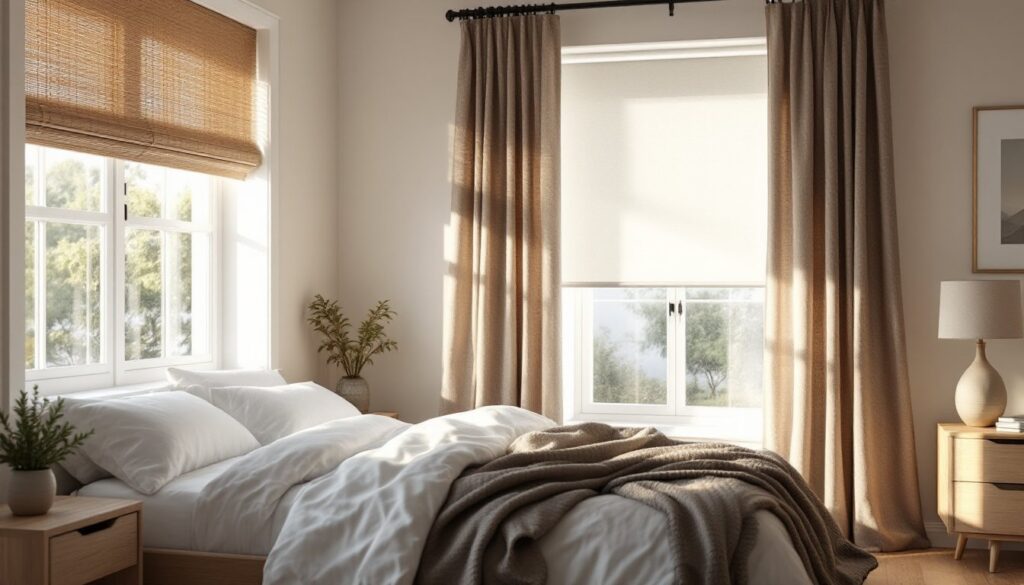
Sheer curtains over blackout roller blinds let homeowners enjoy diffused natural light during the day, then drop the blind for total darkness at night. Mount the curtain rod 4–6 inches above the window frame and extend it 3–4 inches beyond each side to create the illusion of larger windows. Choose a lightweight linen or cotton voile for the sheers, they filter glare without adding weight.
Cellular blinds paired with heavier drapes create maximum insulation for cold climates. The cellular shade traps air in its honeycomb cells, and the thick curtain (velvet, lined cotton, or thermal-backed fabric) adds a second barrier. This setup can reduce drafts noticeably in older homes with single-pane windows.
When layering, avoid mounting both treatments in the same plane. Install the blind inside the window frame or as a flush inside mount, then hang curtains on the wall with standard brackets. This prevents fabric from catching on the blind mechanism and allows independent operation.
Color coordination helps unify the look. If the blinds are white or neutral, introduce pattern or bold color through the curtains. Conversely, if using wood or woven blinds with natural grain, keep curtains in solid, complementary tones to avoid visual clutter.
Modern Minimalist Blinds That Complement Any Décor
Minimalist bedrooms prioritize clean lines, neutral palettes, and clutter-free surfaces. The right blinds should disappear into the architecture rather than compete for attention.
Aluminum mini blinds with ½” or 1″ slats deliver a crisp, industrial look at a modest price point ($15–$40 per window). They’re lightweight, moisture-resistant (ideal if the bedroom has an en-suite bath), and available in matte or satin finishes. White, gray, and black are the most versatile: avoid glossy finishes, which can look cheap and reflect light harshly.
Cordless roller blinds in solid neutrals, white, linen, charcoal, or taupe, maintain the uncluttered vibe. A cordless lift mechanism (push up, pull down) eliminates dangling cords that break the minimalist aesthetic and pose a strangulation hazard for young children and pets. Some models include a slow-descent feature that prevents the blind from snapping up when released.
Panel track blinds suit wider windows or sliding glass doors common in modern builds. These use wide fabric panels (typically 22″ or 33″) that slide along a track, similar to a sliding door. They’re popular in contemporary spaces with floor-to-ceiling glass and work well with neutral linens or semi-sheer materials.
Installation matters. For the cleanest look, use an inside mount that sits flush within the window frame. Measure width at the top, middle, and bottom of the frame (they’re rarely perfectly square) and use the narrowest measurement. Leave ¼” clearance on each side so the blind doesn’t bind.
Natural Material Blinds for a Warm, Organic Feel
Natural material blinds add texture, warmth, and an earthy quality that softens modern or transitional bedrooms. They suit coastal, farmhouse, Scandinavian, and bohemian styles, and they pair well with wood furniture and neutral linens.
Bamboo roll-up shades are affordable ($25–$70) and bring an organic, woven texture. They filter light rather than block it completely, expect about 40–60% light reduction depending on weave tightness. They’re not ideal for blackout needs but excel in guest rooms or spaces where gentle morning light is welcome. Most are operated by a cord or woven pull, and they roll up into a compact bundle at the top.
Woven wood shades (also called matchstick or natural shades) use reeds, grasses, jute, or bamboo woven with fabric backing for better light control. The material provides privacy while allowing soft, diffused light to filter through. For total darkness, add a blackout liner, a fabric panel attached to the back of the shade. This option typically adds $30–$50 to the cost but preserves the natural look from the room side.
Real wood blinds use basswood, oak, or cherry slats in 2″ or 2½” widths. They’re heavier and pricier ($100–$300+ per window) but deliver a refined, furniture-grade appearance. Wood blinds require dry environments: avoid them in bedrooms with high humidity or near bathroom doors where steam can cause warping. Stain or paint options let homeowners match existing trim or furniture.
Faux wood blinds mimic the look of real wood using PVC or composite materials. They resist moisture, won’t warp, and cost significantly less ($40–$120). For most bedrooms, faux wood is the practical choice, it holds up better and cleans easier with a damp cloth.
Smart Blinds and Automated Solutions for Ultimate Convenience
Smart blinds integrate with home automation systems, allowing control via smartphone, voice assistant, or programmed schedule. For bedrooms, this means setting blinds to close automatically at sunset, open gradually at sunrise to simulate dawn, or adjust remotely when away from home.
Motorized roller blinds are the most common smart option. A small motor fits inside the roller tube, powered by either a plug-in adapter, hardwired connection, or rechargeable battery. Battery-powered models are easier to install (no electrician needed) but require recharging every 6–12 months depending on usage. Plug-in models suit windows near outlets: hardwired versions deliver the cleanest look but involve running low-voltage wire through walls, best done during renovation or new construction.
Most motorized blinds connect via Wi-Fi, Zigbee, or Z-Wave protocols. Wi-Fi models integrate directly with Alexa, Google Assistant, or Apple HomeKit without a separate hub. Zigbee and Z-Wave require a compatible hub (like SmartThings or Hubitat) but offer more robust mesh networking and lower power consumption.
Scheduled automation is the killer feature for bedrooms. Set blinds to lower at 10 p.m. for privacy, close fully at 11 p.m. for sleep, then open 10% at 7 a.m. to ease waking. Pair this with smart lighting for a gradual wake-up routine that’s gentler than a blaring alarm.
Retrofit kits like those from SOMA or Axis Gear attach to existing corded blinds, converting them to smart control without full replacement. They clamp onto the chain or cord mechanism and cost $100–$150 per window, far less than replacing the entire blind. But, performance depends on the blind’s weight and condition: older or heavy blinds may strain the motor.
Cost is the main barrier. Motorized blinds start around $200–$300 per window for basic roller shades, with premium cellular or wood options reaching $400–$600+. Installation is straightforward for cordless battery models, mount brackets, snap in the blind, pair with the app, but hardwired setups may require an electrician, adding $100–$200 per window.
Conclusion
Bedroom blinds shape how a room looks, how well occupants sleep, and how much energy escapes through the glass. Whether prioritizing blackout performance, natural texture, minimalist design, or smart automation, the right choice depends on specific needs, window size, and budget. Measure carefully, consider layering for added versatility, and don’t skip light-blocking liners if sleep quality is the priority. With thoughtful selection and proper installation, new blinds deliver immediate comfort and long-term value.