Designing a masculine bedroom isn’t about following rigid stereotypes, it’s about creating a space that reflects personal taste while staying functional. Whether someone lives in a studio apartment or a three-bedroom house, the bedroom should feel like a retreat, not an afterthought with mismatched furniture and bare walls. The best masculine bedrooms balance clean lines with carefully chosen textures, purposeful furniture, and lighting that sets the right mood. This guide walks through the practical elements that transform a basic bedroom into a space with character and intention.
Key Takeaways
- Masculine bedroom ideas thrive on clean lines, quality furniture, and intentional design choices rather than following stereotypes or defaulting to mismatched décor.
- Neutral color palettes like charcoal, slate gray, and navy create a calm foundation, while accent colors such as burnt orange, olive green, and rust add depth in strategic doses.
- Layered lighting with ambient, task, and accent sources transforms the room’s mood—avoid relying solely on overhead fixtures and install dimmable LED bulbs in the 2700-3000K range for relaxation.
- Quality over quantity means investing in durable materials like solid wood bed frames, genuine leather, and heavy-duty canvas rather than trendy pieces that won’t age well.
- Textures from wood, metal, leather, and textiles—combined with purposeful negative space—add visual interest and personality without creating clutter or visual noise.
- Personal touches like one or two larger artwork pieces, curated collections, and functional décor items keep the space lived-in while maintaining the calm, intentional aesthetic.
Essential Elements of a Masculine Bedroom Design
A well-designed masculine bedroom starts with intentional choices rather than decorating by default. The foundation lies in three core elements: clean lines, quality over quantity, and purposeful negative space.
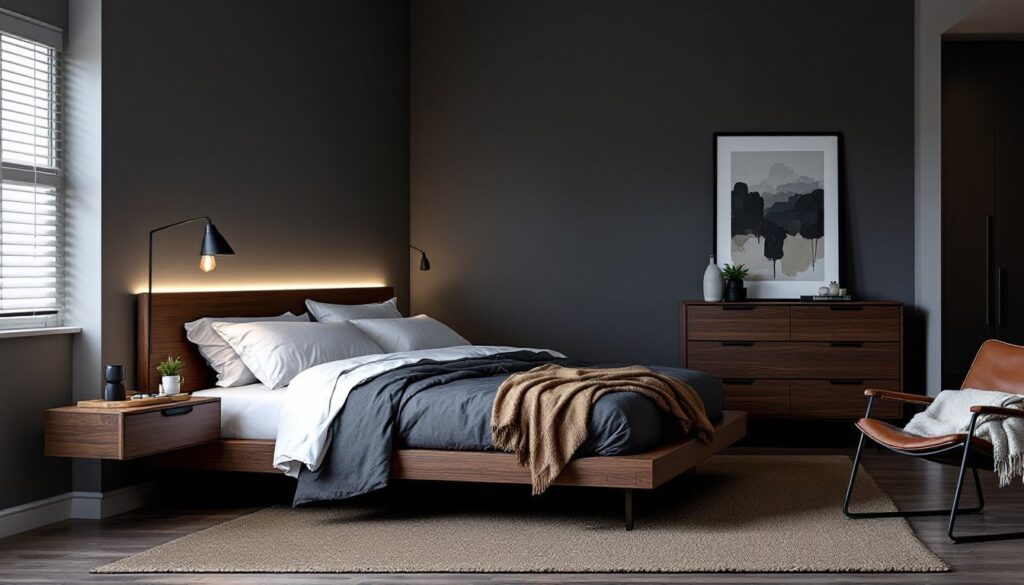
Clean lines mean furniture with simple profiles, platform beds with low frames, nightstands without ornate trim, and dressers with recessed or minimal hardware. Skip anything with excessive curves or decorative flourishes unless it serves a specific aesthetic purpose.
Quality over quantity translates to fewer pieces that last. A solid wood bed frame beats pressboard, and a single well-made leather chair outperforms three cheap accents from a big-box store. This doesn’t require a luxury budget, it means prioritizing durability and timeless design over trendy pieces that won’t age well.
Negative space keeps the room from feeling cluttered. Walls don’t need to be covered floor to ceiling. Leave breathing room around furniture, avoid overcrowding surfaces, and resist the urge to fill every corner. A bedroom should feel calm, not cramped.
Color Palettes That Work for Men’s Bedrooms
Color sets the tone immediately, and masculine bedrooms typically lean toward neutral bases with strategic accent colors.
Neutral foundations include charcoal, slate gray, deep navy, warm taupe, and matte black. These work as wall colors or large furniture pieces. If painting walls, consider a matte or eggshell finish, flat sheens hide imperfections but can be harder to clean, while eggshell offers a slight sheen and better durability. One gallon typically covers 350-400 square feet, so a standard 12′ x 14′ bedroom needs about two gallons for two coats.
Accent colors add depth without overwhelming the space. Burnt orange, olive green, rust, or deep burgundy work well in smaller doses, throw pillows, a single accent wall, or artwork. Avoid pastels or overly bright tones unless they fit a specific design concept.
Wood tones count as color too. Walnut, oak, and reclaimed wood bring warmth to neutral palettes. Mixing wood finishes works fine as long as the undertones align, warm woods (cherry, walnut) pair together, and cooler woods (ash, maple) do the same. Clashing undertones create visual tension that rarely pays off.
Furniture Choices That Combine Function and Style
Furniture should work hard and look good doing it. Every piece needs a clear purpose.
Bed frames: Platform beds with built-in storage underneath maximize space in smaller rooms. Look for frames made from solid wood or steel, avoid particleboard bases that sag under a quality mattress. Standard bed heights range from 18-24 inches from floor to mattress top: lower profiles create a modern look, while higher frames suit traditional styles.
Nightstands: Two matching nightstands aren’t required. A single nightstand on the dominant side (whichever side gets used for charging devices, reading, etc.) often suffices. Aim for nightstand height within 2-4 inches of mattress height for comfortable reach. Drawer storage beats open shelving for hiding clutter.
Seating: A reading chair or small bench at the foot of the bed adds function without crowding. Leather, canvas, or linen upholstery suits masculine aesthetics better than heavy patterns or florals. If space is tight, skip it, cramped rooms lose their calm when overfurnished.
Dressers and storage: Vertical dressers save floor space compared to wide, low models. If the closet is adequate, a dresser might not be necessary at all. Wall-mounted shelving or a clothing valet can handle everyday items without taking up square footage.
Lighting Solutions for the Modern Man’s Bedroom
Lighting changes the entire feel of a room, and bedrooms need layered sources, not just one overhead fixture.
Ambient lighting provides overall illumination. If the room has a ceiling fixture, consider installing a dimmer switch (a basic single-pole dimmer costs $15-30 and takes about 20 minutes to install if the wiring is already in place). Dimmable LED bulbs in the 2700-3000K range create warm, relaxing light suitable for bedrooms. Avoid cool white (4000K+) bulbs, they’re too harsh for a space meant for winding down.
Task lighting serves specific functions. Bedside lamps or wall-mounted swing-arm sconces work for reading. Wall-mounted options free up nightstand space and reduce cords. Aim for 40-60 watts equivalent (LED) for reading without strain.
Accent lighting adds depth. LED strip lights behind headboards or under floating shelves create subtle backlighting. Keep strips on separate switches or use smart plugs to control them independently from main lights.
Skip overhead-only lighting. A single ceiling fixture creates flat, unflattering light and offers no flexibility for mood or tasks.
Textures and Materials That Add Depth
Flat surfaces make rooms feel one-dimensional. Layering textures adds visual interest without extra color.
Textiles: Linen or cotton bedding in solid colors provides a clean base. Add a wool or knit throw blanket at the foot of the bed for texture contrast. Avoid overly busy patterns, geometric prints or subtle stripes work better than loud graphics. If using an area rug, choose materials like jute, wool, or low-pile synthetic blends. A 5′ x 8′ or 8′ x 10′ rug fits most bedrooms: make sure it extends at least 18 inches beyond each side of the bed.
Wood and metal: Mix materials to avoid monotony. A wood bed frame pairs well with metal nightstands or vice versa. Reclaimed wood accent walls add warmth, if going this route, use furring strips and construction adhesive rather than face-nailing planks directly to drywall. It’s easier to remove later and causes less wall damage.
Leather and canvas: These materials age well and suit masculine design. A leather bench, canvas storage bins, or a leather-wrapped tray on a dresser adds subtle texture. Avoid faux leather that cracks after a year, genuine leather or heavy-duty canvas lasts significantly longer.
Personalizing Your Space Without Clutter
Personal touches make a bedroom feel lived-in, but too many small items create visual noise.
Artwork: One or two larger pieces beat a gallery wall of small frames. Matted prints or canvas pieces in simple frames keep the focus on the image, not the frame. Hang artwork so the center sits at eye level (roughly 57-60 inches from the floor). Use drywall anchors rated for the frame weight, most artwork under 20 pounds does fine with plastic anchors, but heavier pieces need toggle bolts or wall studs.
Collections and hobbies: Display meaningful items sparingly. A guitar on a wall mount, a curated bookshelf, or a couple of vintage cameras on a shelf adds personality. Avoid lining every surface with trinkets, choose a few standout pieces and store the rest.
Functional decor: Items that serve a purpose don’t feel like clutter. A quality watch case, a wooden valet tray for keys and wallet, or a charging station that hides cords all add personality while staying useful. If it doesn’t get used regularly or hold sentimental value, it probably doesn’t need to be on display.
Conclusion
Building a masculine bedroom comes down to intentional choices, neutral colors, quality furniture, layered lighting, and textures that add depth without chaos. Skip the filler, invest in pieces that last, and personalize with purpose. The result is a space that feels both functional and distinctly personal, not just a room with a bed in it.