A bedroom should be more than just a place to sleep, it’s a personal retreat from daily chaos. Creating a calming oasis doesn’t require a complete renovation or a designer budget. With strategic improvements to color, lighting, texture, and organization, any bedroom can become a space that promotes rest and relaxation. The following seven ideas blend practical DIY upgrades with design principles that transform ordinary bedrooms into serene sanctuaries. Each approach focuses on tangible changes homeowners can carry out themselves, from paint selection to furniture arrangement.
Key Takeaways
- Choose cool neutrals, muted earth tones, and soft finishes like eggshell or matte paint to create a calming bedroom environment that naturally reduces visual stimulation and encourages relaxation.
- Layer quality bedding using natural fibers like cotton and linen with a thread count between 300-500, then add textures through throws and shams to improve both comfort and room aesthetics.
- Incorporate low-maintenance plants such as snake plants or pothos alongside natural wood elements and stone accents to add life and organic texture without requiring major construction.
- Install dimmer switches and layered lighting with warm white LED bulbs (2700-3000K) at multiple levels to replace harsh overhead lighting and promote better sleep quality.
- Declutter your bedroom oasis by removing non-bedroom items, installing smart storage solutions like floating shelves and under-bed bins, and limiting personal decor to a curated few meaningful pieces.
Choose Calming Colors and Natural Textures
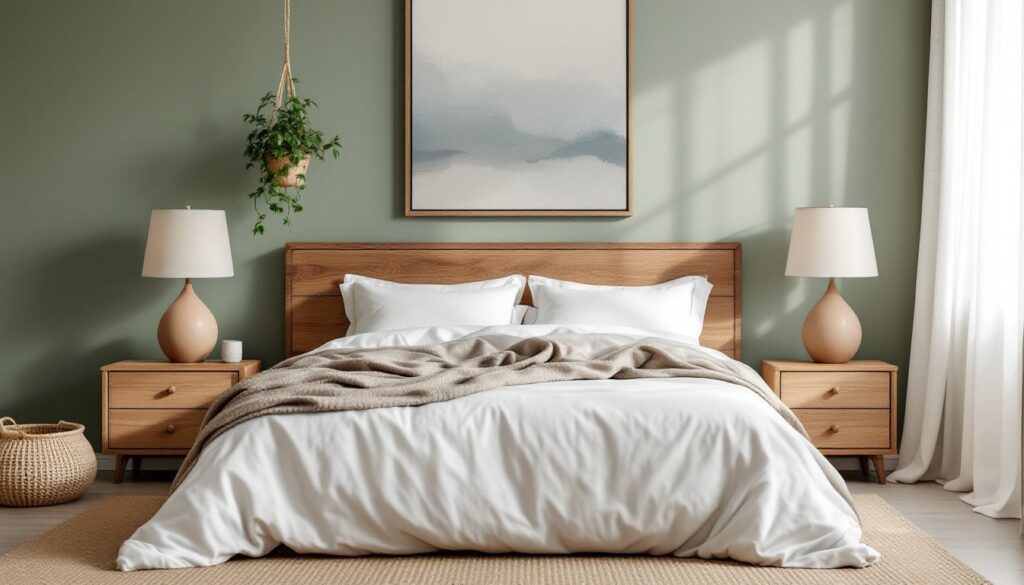
Paint color influences mood more than most DIYers realize. For a tranquil bedroom, stick with cool neutrals and muted earth tones, soft grays, warm taupes, dusty blues, or sage greens. These hues naturally lower visual stimulation and encourage relaxation.
When selecting paint, use eggshell or matte finishes rather than glossy sheens. Flat finishes absorb light instead of reflecting it, creating a softer atmosphere. One gallon typically covers 350-400 square feet, so a standard 12×12 bedroom needs about two gallons for two coats.
Beyond paint, incorporate natural textures through materials like linen curtains, jute rugs, or grasscloth wallpaper. These elements add depth without overwhelming the senses. A jute or sisal area rug (8×10 is standard for queen-sized bedrooms) grounds the space and provides tactile warmth underfoot. If installing wallpaper, apply it to a single accent wall, usually the wall behind the bed, to avoid visual clutter. Use wallpaper primer first to ensure proper adhesion and easier removal down the line.
Avoid high-contrast color schemes or busy patterns on large surfaces. Save bold colors for small accents that can be easily swapped out.
Layer Luxurious Bedding for Ultimate Comfort
Quality bedding transforms sleep quality and room aesthetics simultaneously. Start with a solid foundation: a mattress protector and well-fitted sheets with a thread count between 300-500 (higher isn’t always better, weave quality matters more than thread count alone).
Layering creates both visual interest and functional comfort. Begin with a flat sheet, add a lightweight blanket or coverlet, then top with a duvet or quilt. This allows for temperature adjustment throughout the night. Choose natural fibers, cotton, linen, or bamboo, over synthetic materials. They breathe better and regulate temperature more effectively.
For pillows, invest in quality down alternative or memory foam options that maintain shape. Standard pillows measure 20×26 inches, queen size runs 20×30 inches. Most sleepers need two pillows for proper neck support, plus decorative shams for daytime presentation.
Add texture through a chunky knit throw at the foot of the bed or a textured euro sham against the headboard. Stick to three coordinating colors maximum to maintain visual calm. Wash all bedding before first use to remove manufacturing residues and soften fibers, add half a cup of white vinegar to the rinse cycle for extra softness without fabric softener buildup.
Incorporate Natural Elements and Greenery
Plants improve air quality and add life to a bedroom without requiring major construction. Choose low-maintenance varieties that thrive in bedroom conditions: snake plants, pothos, peace lilies, or ZZ plants. These tolerate low light and irregular watering.
For placement, use nightstand space for small 4-6 inch pots, or add a tall floor plant (8-10 inch pot) in an empty corner. Ensure pots have drainage holes and saucers underneath to prevent water damage to flooring. Terra cotta pots allow soil to breathe, but glazed ceramic retains moisture longer, choose based on your watering habits.
Beyond plants, introduce natural wood elements through furniture or decor. A reclaimed wood headboard or live-edge floating shelf adds organic texture. If building a headboard, use 1×6 or 1×8 pine boards (actual dimensions 3/4″ x 5.5″ or 3/4″ x 7.25″) mounted to a 2×4 frame attached to wall studs for stability. Sand to 220-grit and finish with natural oil or water-based polyurethane to preserve the wood’s character.
Other natural materials include stone accents (marble or slate coasters on nightstands), rattan baskets for storage, or a bamboo ladder for hanging throws. These elements ground the space and create visual connections to nature.
Create Ambient Lighting for Relaxation
Harsh overhead lighting destroys bedroom ambiance. The goal is layered lighting at multiple levels with dimming capability.
Start by installing a dimmer switch on existing overhead fixtures, a straightforward electrical upgrade for DIYers comfortable with basic wiring. Turn off power at the breaker, remove the old switch, and connect the dimmer following manufacturer instructions (typically matching black to black, white to white, green to ground). Use a non-contact voltage tester to confirm power is off before touching any wires. This project falls under NEC standards but typically doesn’t require a permit for simple switch replacement.
Add bedside table lamps with 3-way bulbs or built-in dimmers for reading. Position them 24-28 inches above mattress height for optimal reading angles. Warm white LED bulbs (2700-3000K color temperature) mimic natural evening light and promote melatonin production better than cool white or blue-spectrum bulbs.
For accent lighting, install battery-operated LED strip lights behind the headboard or under floating nightstands to create a soft glow. These mount with adhesive backing and require no electrical work. Choose strips rated for at least 300 lumens per foot for adequate ambient light.
Avoid placing any light source directly in the line of sight from the bed. Indirect, diffused lighting creates the most restful environment.
Declutter and Maximize Serene Storage Solutions
Visual clutter directly impacts stress levels. A tranquil bedroom requires functional storage that keeps surfaces clear.
Start by evaluating what actually belongs in the bedroom. Remove work materials, exercise equipment, and excess furniture. If closet space is limited, install a closet organization system with adjustable shelving. Pre-fab systems from major retailers fit standard closet widths (typically 48, 60, or 72 inches) and mount directly to wall studs with 3-inch construction screws.
For under-bed storage, use low-profile rolling bins (6-8 inches tall) that slide easily on carpet or hardwood. Measure bed frame clearance first, many platform beds offer less than 6 inches. Choose bins with lids to prevent dust accumulation.
Floating shelves provide storage without floor space consumption. Install them using heavy-duty wall anchors rated for at least 50 pounds, or mount directly into studs with 2.5-inch wood screws. Use a stud finder and level for proper placement, shelves should be perfectly horizontal to prevent items from sliding.
Nightstand selection matters. Choose designs with at least one drawer to hide charging cables, medications, and personal items. Open shelving looks clean initially but becomes a clutter magnet. Cable management clips or a small charging station inside the drawer keeps cords organized and out of sight.
Add Personal Touches That Promote Peace
Personal elements make a bedroom feel like a retreat rather than a hotel room, but selection requires restraint.
Choose artwork with calming imagery, landscapes, abstract pieces in soft colors, or photography that evokes positive memories. Frame size should relate to furniture scale: artwork above a queen headboard should span 50-75% of the headboard width. Hang frames so the center sits at 57-60 inches from the floor (standard gallery height), or 6-12 inches above furniture if mounting above a dresser.
Textiles offer easy personalization. A vintage quilt, handwoven throw, or textured area rug adds character without permanent commitment. Layer a smaller accent rug (3×5 or 4×6) over neutral wall-to-wall carpet for a pop of pattern.
For scent, use essential oil diffusers with calming fragrances like lavender, chamomile, or sandalwood. Avoid plug-in air fresheners or heavily scented candles, artificial fragrances can disrupt sleep. If using candles, choose soy or beeswax options and never leave them burning unattended.
Sound matters too. A white noise machine or small tabletop fountain masks disruptive noises. For fountains, use distilled water to prevent mineral buildup on the pump, and clean it monthly to maintain quiet operation.
Keep personal items to a curated few. Three meaningful objects create impact: thirty create clutter.
Conclusion
Transforming a bedroom into a tranquil oasis doesn’t demand extensive renovation or professional help. Through intentional choices in color, texture, lighting, and organization, any bedroom becomes a genuine retreat. Focus on quality over quantity, fewer, better-chosen elements create more impact than filling every surface. Start with one or two projects that address the room’s biggest pain points, then build from there as time and budget allow.