Small bedroom walk-in closets present a unique challenge: they’re technically walk-in, but the footprint doesn’t offer much breathing room. The typical builder-grade wire rack and single rod don’t cut it when every inch counts. IKEA systems offer a practical solution that adapts to awkward dimensions, low ceilings, and tight corners without requiring custom cabinetry prices. With modular components, adjustable shelving, and mix-and-match accessories, homeowners can create storage that actually fits their wardrobe instead of forcing clothes into a one-size-fits-all setup. This guide walks through proven IKEA-based layouts, system choices, and organization tricks designed specifically for small walk-in closets.
Key Takeaways
- IKEA closet systems cost 40-60% less than custom installations while offering modular components that adapt to small walk-in closet dimensions without requiring professional cabinetry.
- The PAX wardrobe system with standard 22.875″ depth works best for most small walk-ins, paired with pull-out accessories like trouser hangers and shoe racks to maximize vertical storage in tight spaces.
- L-shaped, U-shaped, and single-wall layouts distribute IKEA storage efficiently across different closet footprints, with vertical zoning ensuring daily-use items stay at arm’s reach to speed up morning routines.
- LED strip lighting and affordable IKEA accessories like SKUBB storage boxes and pegboards transform dim closets into organized spaces without requiring major renovation investment.
- Start with frames and hanging rods, then phase in drawers and specialty organizers over time to spread costs and keep clothes accessible during installation.
Why IKEA Is Perfect for Small Walk-In Closet Solutions
IKEA’s closet systems excel in small spaces for three practical reasons: modularity, cost, and availability.
The modular design means components come in standardized widths (typically 19.75″, 29.5″, 39.25″, and 49.25″ for PAX frames) that can be mixed to fill irregular wall lengths. Unlike custom closets that require professional measuring and installation, IKEA units ship flat-packed with all hardware included. A homeowner can reconfigure or expand the system later without ripping out and replacing everything.
Cost runs roughly 40-60% less than comparable custom closet installations from big-name organizers. A basic 8-foot PAX setup with shelves, drawers, and rods typically costs $600-900 depending on interior fittings, compared to $2,000+ for professionally installed systems. For renters or homeowners planning to move within a few years, that’s a significant difference.
Availability matters when a project hits a snag. IKEA stocks replacement parts, and most metro areas have same-day pickup or next-day delivery. If a drawer runner breaks or someone needs to add another shelf unit, the parts are in stock, not special-order with a six-week lead time.
Essential IKEA Systems for Maximizing Small Closet Space
IKEA offers three main closet systems, each with distinct advantages for small walk-ins. Choosing the right foundation determines how much storage fits and how easily the system adapts over time.
PAX Wardrobe System: Customizable Storage for Tight Spaces
The PAX system uses freestanding wardrobe frames that can be installed with or without doors. For small walk-ins, frameless PAX units installed wall-to-wall work best, they maximize interior space by eliminating the cabinet sides between units.
Frames come in three depths: 13.75″ (narrow), 22.875″ (standard), and 26″ (deep). Most small closets benefit from the standard 22.875″ depth, which accommodates hanging clothes without wasting floor space. The narrow depth works for shoes, folded items, or shallow closets (under 4 feet deep) where deeper units would block walkways.
Height options include 79.25″ and 93.125″. The taller frame adds 30% more storage but requires ceiling clearance of at least 96″ (8 feet). In older homes with 84″ or 90″ ceilings, the shorter frame is the only option.
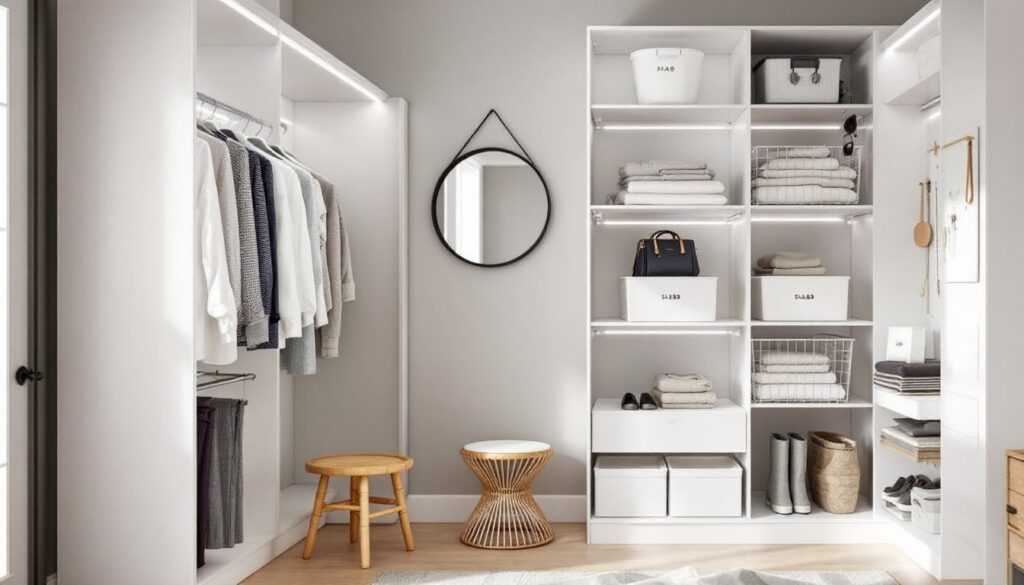
Interior fittings include pull-out trouser hangers (each holds 6-8 pairs), wire baskets (for folded sweaters or gym clothes), pull-out shoe racks (3 tiers fit roughly 9 pairs), and jewelry organizers. Combining these accessories reduces the need for drawer units, which eat up vertical space.
Installation note: PAX frames must be anchored to wall studs using the included brackets. Drywall anchors alone won’t handle the weight of a loaded wardrobe. Use a stud finder and 3″ wood screws into studs, or toggle bolts rated for at least 50 lbs if studs don’t align with frame positions.
ELVARLI and ALGOT: Flexible Open Storage Solutions
For tighter budgets or renters who can’t anchor heavy furniture, ELVARLI and ALGOT provide open-frame alternatives.
ELVARLI uses floor-to-ceiling posts with brackets that clip in at any height without tools. Shelves, rods, and drawer units hook onto the brackets, so the layout can change in minutes. The system works well in closets with sloped ceilings or odd angles, posts adjust from 87″ to 133″ in height. Components come in white or bamboo.
One downside: ELVARLI posts require tension between floor and ceiling, so they won’t work in closets with drop ceilings or textured finishes that prevent a solid grip.
ALGOT mounts to wall-mounted tracks, similar to industrial shelving. It’s the lightest and cheapest system but also the least robust. Weight capacity per bracket is roughly 26 lbs, so it’s better suited for shoes, bags, and folded clothes than heavy winter coats. ALGOT works in closets where wall space is interrupted by doors, windows, or electrical panels, since each track mounts independently, there’s no need for continuous walls.
Smart Layout Ideas for Bedroom Walk-In Closets
Layout determines whether a small walk-in feels functional or cramped. These configurations work for closets ranging from 4×4 feet to 5×7 feet.
L-shaped layout: Install storage on two adjacent walls, leaving the corner open. This works in square or nearly square closets (4×4 to 5×5 feet). One wall holds hanging rods at two heights (short items on top, long items below), while the perpendicular wall uses shelves and drawers for folded items and accessories. The open corner becomes a dressing area or mirror spot.
U-shaped layout: Storage wraps three walls, with a narrow aisle down the center. This fits rectangular closets at least 5 feet wide and 6 feet deep. Use the back wall for long hanging (dresses, coats), and flank both sides with double-hang rods (shirts over pants). Aim for a 24-30″ aisle width, anything narrower feels claustrophobic and makes it hard to access lower shelves or drawers.
Single-wall galley: For very narrow closets (under 4 feet wide), load all storage on one long wall and leave the opposite side clear. This prevents the “hallway” feeling and allows space to pull out drawers or baskets without blocking the walkway. Add a small stool or hamper on the empty side if space allows.
Vertical zones: Divide the wall into three height zones. Upper zone (above 72″) holds off-season items in baskets or bins. Middle zone (36-72″) is prime real estate for daily-use hanging and shelves. Lower zone (below 36″) works for shoes, bags, or pull-out baskets. Avoid putting frequently used items above shoulder height, step stools slow down morning routines.
Clever Organization Hacks Using IKEA Accessories
Once the main system is installed, accessories turn empty space into functional storage.
KOMPLEMENT pull-out trays fit inside PAX frames and work perfectly for watches, sunglasses, or charging cables. The shallow depth (roughly 2″) keeps small items visible instead of buried in a drawer.
SKUBB boxes (fabric storage bins in multiple sizes) fit on shelves and hide clutter. The 9×13.5×7″ size works for underwear, socks, or gym gear. Label the ends with a paint pen or printed tags so no one has to dig through every box.
VARIERA shelf inserts double the usable space inside deep shelves. Stack sweaters or t-shirts on the lower tier, and use the upper tier for bags or hats. These work in PAX, ELVARLI, or any shelf at least 12″ deep.
HUGAD curtain rods (mounted between shelves or under a top shelf) create extra hanging space for scarves, ties, or belts. They’re cheaper and more flexible than dedicated accessory hangers.
SKÅDIS pegboards mount on empty wall sections or inside closet doors. Hang jewelry, keys, or small bags on hooks, and swap the layout as needs change. The pegboard comes in white, wood, or black.
LED strip lighting transforms dim closets. IKEA’s LEDBERG or STRIBERG strips install under shelves with adhesive backing and plug into a standard outlet. Battery-powered STÖTTA lights work where outlets aren’t available. Aim for cool white (4000K) over warm white, it renders clothing colors more accurately.
Budget-Friendly Design Tips for Your IKEA Closet Makeover
A functional IKEA closet doesn’t require buying every accessory. Start with the basics, then add over time.
Begin with frames and rods. Get the bones installed first, PAX frames or ELVARLI posts, plus enough hanging rods to handle current wardrobe needs. Drawers, baskets, and specialty organizers can come later as budget allows.
Mix systems strategically. Combine PAX frames for the main hanging section with ALGOT shelves in a corner or above the door. ALGOT costs roughly half as much per linear foot as PAX interiors, so using it for low-priority zones (off-season storage, luggage) cuts total cost by 15-20%.
Skip doors if space is tight. PAX doors add $150-300 per section and eat up swing clearance. In a walk-in closet, open shelving keeps everything visible and accessible. If dust is a concern, use fabric bins on upper shelves instead.
DIY paint or wallpaper the interior. A coat of semi-gloss paint (easier to clean than flat) or peel-and-stick wallpaper transforms builder-grade drywall. Prep by filling nail holes with lightweight spackling, sanding smooth, and priming if going from dark to light colors. Paint coverage averages 350-400 square feet per gallon for quality brands, so a quart usually covers a small closet.
Shop IKEA’s As-Is section for frames and large components. Minor dents or scratches on the back or sides don’t matter once units are installed against walls. Discounts typically run 20-50% off retail.
Phase the project. Install one wall at a time rather than emptying the entire closet at once. This keeps clothes accessible and spreads costs across multiple paychecks. Start with the wall that holds the most-worn items, once that’s dialed in, the rest of the closet is easier to plan.