A well-designed Airbnb bedroom can be the difference between a three-star review and a five-star repeat guest. Travelers expect more than just a place to sleep, they want comfort, cleanliness, and thoughtful touches that make them feel welcome. The bedroom sets the tone for the entire stay, and hosts who invest in smart design choices see better reviews, higher occupancy rates, and the ability to charge premium nightly rates. From hotel-quality bedding to strategic lighting and clutter-free storage, small upgrades deliver measurable returns. This guide breaks down practical, budget-conscious bedroom ideas that turn rental spaces into guest favorites.
Key Takeaways
- Airbnb bedroom design directly impacts guest reviews and ratings, with travelers now expecting hotel-quality comfort rather than basic sleeping accommodations.
- Invest in a quality medium-firm mattress with a 10-year warranty, hotel-grade bedding with 300+ thread count sheets, and multiple pillows to ensure guests experience the best sleep possible.
- Strategic lighting with layered ambient, task, and accent options—including dimmable overhead fixtures and individual bedside lamps—transforms bedroom ambiance and guest comfort.
- Smart storage solutions like matching hangers, dressers, floating shelves, and luggage racks help guests unpack and settle in, signaling the space was thoughtfully designed for them.
- High-impact, budget-friendly upgrades such as new hardware, fresh paint, improved window treatments, and modern outlet covers deliver measurable returns without requiring full renovations.
- Blackout curtains, neutral décor, mirrors, and simple finishing touches create a welcoming atmosphere that guests remember, directly translating into five-star reviews and higher booking rates.
Why Your Airbnb Bedroom Design Matters More Than You Think
Guest expectations have shifted. Travelers compare rental bedrooms to mid-range hotel rooms, not spare bedrooms in someone’s house. A cluttered, poorly lit, or uncomfortable sleeping space leads to lower ratings, which directly impacts search visibility on booking platforms.
First impressions form within seconds of opening the bedroom door. If the space feels cramped, dark, or impersonal, guests notice, and they mention it in reviews. Positive bedroom experiences, on the other hand, translate into comments about “best sleep ever” and “can’t wait to return,” which are goldmines for future bookings.
Design choices also affect turnover efficiency. A bedroom that’s easy to clean, with durable finishes and minimal breakables, reduces prep time between guests. Investing in quality materials upfront, like washable headboards and stain-resistant rugs, pays off in lower replacement costs and less maintenance hassle over time.
Create a Hotel-Quality Bed That Guests Can’t Stop Raving About
The bed is the non-negotiable centerpiece. Guests will forgive outdated décor if they sleep well, but they won’t overlook a sagging mattress or scratchy sheets.
Mattress selection: Aim for a medium-firm memory foam or hybrid mattress with at least a 10-year warranty. Queen-size fits most spaces: king-size works for larger rooms targeting couples. Add a waterproof mattress protector under the fitted sheet, it’s easier to launder than replacing a stained mattress. Budget $400–$800 for a quality mattress that’ll last multiple years of high turnover.
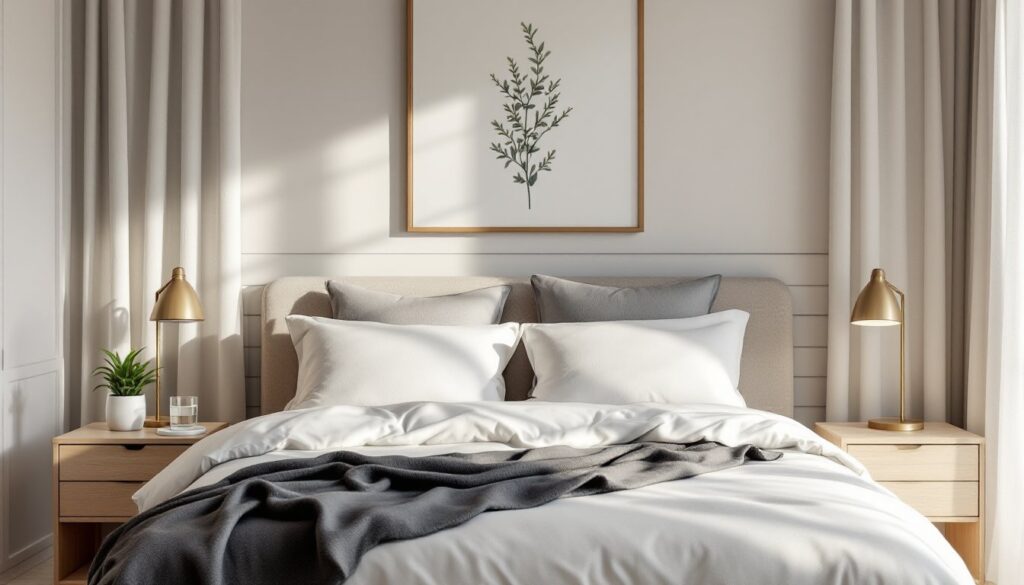
Bedding layering: Start with a 300+ thread count cotton or microfiber sheet set in white or neutral tones, easier to bleach and match across units. Add a duvet with a removable, washable cover rather than a traditional comforter. Guests appreciate the fresh feel of a duvet, and covers launder faster than bulky comforters. Include at least four pillows per queen bed: two firm, two soft, to accommodate different sleep preferences.
Finishing details: A padded headboard (upholstered or faux leather) adds comfort for guests who read in bed and elevates the room’s look. Skip decorative throw pillows, they’re dust collectors that guests remove immediately. Instead, fold a lightweight throw blanket at the foot of the bed for chilly nights.
Smart Storage Solutions That Keep Your Space Clutter-Free
Guests arrive with luggage, and if there’s nowhere to unpack, clothes end up piled on chairs or floors. Clear storage signals that the space was designed for them, not just hastily converted.
Closet essentials: Provide at least six matching hangers, wooden or velvet-coated, not wire. Add a small shelf or luggage rack inside or near the closet so suitcases stay off the bed. If the closet lacks a door, install a tension rod with a simple curtain to hide storage and maintain a tidy appearance.
Dresser or open shelving: A three- or four-drawer dresser gives guests a spot for folded items. If space is tight, floating shelves (installed into wall studs with appropriate anchors) work well for smaller items. Label or leave one drawer completely empty, it’s a subtle touch that guests notice.
Under-bed storage: Use bed risers to lift the frame 6–8 inches and slide shallow storage bins underneath for extra linens or seasonal items. Keep this area guest-free: it’s for host use only. Make sure bins are opaque and closed so the space doesn’t look cluttered from a guest’s perspective.
Nightstand function: Each side of the bed needs a small surface with a drawer or shelf. Guests need a spot for phones, glasses, and water. Built-in USB charging ports are a bonus but not required, a simple power strip mounted to the back of the nightstand works just as well.
Lighting Ideas That Set the Perfect Ambiance
Poor lighting ruins otherwise well-designed rooms. Overhead fixtures alone create harsh shadows, and a single bedside lamp forces one guest to disturb the other when reading.
Layered lighting approach: Combine three types, ambient (overhead), task (reading), and accent (mood). Install a dimmable LED ceiling fixture or a flush-mount with a warm color temperature (2700–3000K). Dimmer switches (standard single-pole or smart versions) cost $15–$40 and take 15 minutes to install if you’re comfortable working with basic electrical wiring. Always turn off power at the breaker before touching any wiring.
Bedside task lighting: Place matching lamps on both nightstands with individual switches so each guest controls their own light. Swing-arm wall sconces save surface space in tighter rooms. Use LED bulbs rated 40–60W equivalent to avoid overly bright or dim conditions. Avoid trendy Edison bulbs, they’re visually harsh and inefficient.
Accent and ambient options: Plug-in LED strip lights behind the headboard or under floating nightstands add a soft glow without taking up space. Battery-powered puck lights inside closets help guests see clothing without fumbling for switches. Blackout curtains or cellular shades are essential, guests need the option to sleep in or block streetlights. Pair with sheer panels for daytime privacy without sacrificing natural light.
Décor and Finishing Touches That Make Guests Feel at Home
Thoughtful details turn a functional bedroom into a memorable stay. Keep décor simple, neutral, and easy to maintain.
Wall treatments: A fresh coat of paint in a neutral tone (greige, soft white, light gray) makes the room feel clean and spacious. One accent wall behind the bed, painted or finished with peel-and-stick wallpaper or shiplap paneling, adds visual interest without overwhelming the space. If installing paneling, use a level and locate studs for secure mounting: lightweight peel-and-stick options require only a clean, smooth surface.
Artwork and mirrors: Hang one or two framed prints (canvas or framed posters) above the bed or on adjacent walls. Avoid personal photos or overly specific themes, landscapes, abstract art, or botanical prints appeal broadly. A large mirror (at least 24×36 inches) mounted on the wall opposite the window reflects light and makes small rooms feel larger. Use appropriate wall anchors rated for the mirror’s weight: toggle bolts work well in drywall, and masonry anchors are required for brick or concrete.
Textiles and softness: A machine-washable area rug (5×7 or 8×10) anchors the bed and softens footsteps, especially in rooms with hardwood or laminate flooring. Choose low-pile synthetic fibers that resist stains. Window treatments in a fabric that complements the bedding create a cohesive look without exact matching.
Guest amenities: A small tray on the dresser with bottled water, a notepad, pen, and local guides shows care. Skip heavy décor on nightstands, guests need that surface space. A full-length mirror (leaning or wall-mounted) helps with outfit checks before heading out.
Budget-Friendly Bedroom Upgrades With Maximum Impact
Not every improvement requires a full renovation. Strategic updates deliver noticeable results without draining the budget.
High-impact, low-cost changes:
- Swap out hardware: Replace old drawer pulls and closet knobs with modern brushed nickel or matte black versions. Hardware costs $3–$8 per piece, and installation requires only a screwdriver.
- Upgrade switch plates and outlet covers: Swapping builder-grade plastic for smooth, screwless versions costs under $20 per room and takes 10 minutes.
- Add crown molding or baseboards: If existing trim is damaged or missing, installing 3–4 inch MDF or pine baseboards and simple crown molding gives the room a finished look. Cut miters carefully with a miter saw for tight joints at corners.
- Refresh caulking and grout: Re-caulk around baseboards and touch up any grout if there’s an en-suite bathroom visible from the bedroom. Cracked caulk looks neglected and signals poor maintenance.
- Paint or replace the door: A fresh coat of paint on the bedroom door and new hinges (if old ones squeak or show rust) cost under $30 and improve the entry experience.
Where to spend more:
- Mattress and bedding (as covered earlier)
- Blackout window treatments
- Dimmable lighting with quality fixtures
Where to save:
- Décor and artwork (printable downloads, thrift store frames)
- Nightstands and dressers (sand and paint secondhand furniture for a custom look)
- Textiles like throws and decorative pillows (buy on sale, skip high-end brands)
Timing purchases around major sales (Memorial Day, Black Friday, end-of-season clearances) can cut costs by 30–50% on furniture and linens.
Conclusion
An Airbnb bedroom that prioritizes comfort, function, and thoughtful design stands out in a crowded rental market. Focus on the bed, lighting, and storage first, those elements drive guest satisfaction. Add finishing touches and upgrades gradually as budget allows. Guests remember how well they slept and whether the space felt welcoming, and those memories translate directly into reviews and repeat bookings. Invest smartly, maintain consistently, and the bedroom will work as hard as the host does.