A kitchen backsplash does more than protect walls from splatter, it sets the tone for the entire space. Whether someone’s working with builder-grade cabinets or a full remodel budget, the right backsplash bridges countertops and cabinetry while adding personality without overwhelming the room. From classic subway tile to bold geometric patterns, today’s options span every style and skill level. This guide breaks down the most effective backsplash ideas for 2026, with practical installation insight and honest talk about what works, what doesn’t, and what’s worth the extra effort.
Key Takeaways
- A kitchen backsplash serves three critical functions: moisture protection behind ranges and sinks, visual continuity between countertops and cabinets, and resale value, often returning 70–80% of material costs.
- Classic subway tile remains the most versatile and beginner-friendly backsplash option, costing $8–$15 per square foot and pairing seamlessly with any cabinet or countertop style.
- Trending backsplash ideas for 2026 include Zellige handmade tile, bold geometric patterns, dramatic veining in quartzite slabs, and mixed materials that add texture and personality to modern kitchens.
- Budget-friendly alternatives like peel-and-stick vinyl, painted high-gloss finishes, and inexpensive ceramic tile in creative patterns can deliver upscale looks without high material costs.
- Proper surface prep, layout planning, and correct adhesive and grout selection are essential for backsplash longevity; seal natural stone annually and clean weekly with pH-neutral cleaners to prevent staining and mold.
- Match your backsplash material and pattern to your kitchen’s overall style—traditional, modern, farmhouse, industrial, or transitional—and ensure it complements rather than competes with countertop materials.
Why Your Kitchen Backsplash Matters More Than You Think
A backsplash serves three critical functions: moisture protection, visual continuity, and resale value. Behind ranges and sinks, walls take a beating from grease, water, and food acids. Drywall alone won’t hold up, moisture seeps behind paint, leading to mold and deterioration. Most building codes require a non-combustible surface behind cooktops, typically extending at least 18 inches above the cooking surface.
Beyond code, a backsplash creates a bridge between countertops and upper cabinets. Without it, the wall looks unfinished, especially with stone or quartz counters that have visual weight. It’s also one of the highest-ROI cosmetic upgrades, often returning 70–80% of material costs at resale, particularly in dated kitchens.
Material choice impacts maintenance. Glazed ceramic and porcelain tile resist staining and clean with standard household spray. Natural stone like marble or travertine requires periodic sealing, skip it, and grout lines darken with grease within months. Glass tile shows water spots but never stains. Peel-and-stick options work for renters but lack durability under heat near ranges.
Timeless Backsplash Ideas That Never Go Out of Style
Classic Subway Tile
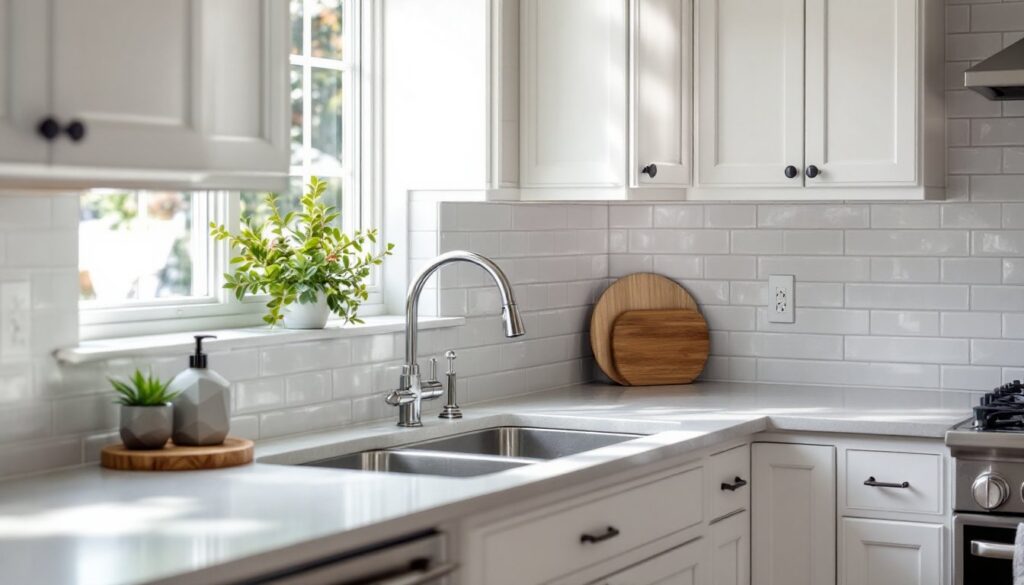
3×6-inch white subway tile remains the workhorse of kitchen backsplashes. It pairs with any cabinet color, countertop material, and hardware finish. Standard running bond (brick pattern) looks clean: vertical stack bond feels modern. White grout keeps it bright: dark grout (charcoal or black) hides staining in high-use areas but creates contrast that may not suit every aesthetic.
Installation is beginner-friendly. Tiles are lightweight, cuts are minimal with a wet saw or tile scorer, and the grid pattern is forgiving. Expect to pay $8–$15 per square foot for materials, depending on tile quality and region.
Marble Slab or Large-Format Tile
Full-height marble slabs eliminate grout lines and create a seamless, high-end look. Carrara, Calacatta, and Statuario are common choices, each with distinct veining. Slabs require professional templating and installation due to weight and precision cuts around outlets and windows. Budget $50–$150+ per square foot installed.
Large-format porcelain (12×24-inch or larger) mimics the slab look at a fraction of the cost. Fewer grout lines mean less maintenance. Use ⅛-inch or smaller spacers and a large-notch trowel (½-inch) for proper adhesion on tiles this size.
Neutral Stone Mosaics
Travertine, limestone, or slate mosaics in earth tones work across traditional and transitional kitchens. Mesh-backed sheets (typically 12×12-inch) speed installation. Honed finishes hide wear better than polished. Seal stone before grouting and annually thereafter with a penetrating sealer to prevent staining from oils and acids.
Modern and Trendy Backsplash Designs for 2026
Zellige and Handmade Tile
Zellige, Moroccan clay tiles with an irregular, glossy glaze, adds texture and depth. Each tile varies slightly in size and color, creating an artisan look that’s trending in 2026. Expect $18–$35 per square foot for material. Installation takes patience: uneven edges require skilled setting and wider grout lines.
Bold Geometric Patterns
Hexagons, chevrons, arabesque (lantern-shaped), and fish-scale tiles break up visual monotony. These work best as accents behind ranges or in small kitchens where the backsplash is the focal point. Pair bold patterns with minimal cabinetry, white or light wood, to avoid visual clutter.
Cutting geometric tile around outlets is tricky. A wet saw with a diamond blade is essential. Plan layout from the center point outward to balance pattern symmetry.
Slab Backsplashes with Veining Drama
Quartzite and porcelain slabs with dramatic veining (book-matched for symmetry) are replacing marble in high-end kitchens. They’re harder and less porous than marble, so they resist etching from lemon juice or vinegar. Installation requires fabricators who typically handle countertops, adding coordination but ensuring a seamless counter-to-backsplash transition.
Metal and Mixed Materials
Stainless steel sheets or copper tiles add industrial edge. Copper develops a patina over time, some homeowners love it: others prefer lacquered copper that stays bright. Mixed materials (glass and stone, or tile and metal insets) create custom looks but require careful planning to avoid a busy appearance. Use one material as the dominant field and the other as an accent stripe or border.
Budget-Friendly Backsplash Ideas That Look Expensive
Peel-and-Stick Tile
Self-adhesive vinyl or gel tiles have improved significantly. Quality options mimic subway tile, marble, or even penny rounds. They’re ideal for rentals or temporary updates. Surface prep is critical, walls must be clean, dry, and smooth. They won’t hold up to direct heat: keep them at least 6 inches away from gas burners.
Expect $1–$8 per square foot. Higher-priced versions use thicker material and better adhesive. They remove cleanly if applied correctly, though some leave residue on textured drywall.
Painted Backsplash with High-Gloss or Semi-Gloss Paint
A less common but effective budget solution: high-gloss or semi-gloss paint in a bold color or classic white. The sheen allows wipe-down cleaning, though it won’t stand up to sustained moisture like tile. Use a bonding primer on previously painted or glossy surfaces. Add a clear polyurethane topcoat for extra protection near sinks.
Cost: under $50 for most kitchens. Durability is the trade-off, but it’s easily refreshed.
Beadboard or Shiplap Panels
Painted beadboard panels (typically ⅛ to ¼-inch MDF or PVC) deliver farmhouse or cottage charm. PVC versions resist moisture better than MDF. Install with construction adhesive and finish nails, caulk seams, then paint with semi-gloss.
Keepbeadboard behind sinks or in low-splash zones. It’s not suitable directly behind cooktops unless a code-compliant heat shield is installed underneath. Budget $1–$3 per square foot for materials.
Basic Ceramic in Creative Patterns
Inexpensive 4×4-inch or 6×6-inch ceramic tile (under $2 per square foot) looks elevated when installed in herringbone, basket weave, or vertical stack bond. Grout color makes a big impact, try a contrasting shade to highlight the pattern.
Choosing the Right Backsplash for Your Kitchen Style
Match backsplash to cabinet style and countertop material to avoid visual conflict.
Traditional kitchens: Subway tile, tumbled stone, or classic arabesque in neutral tones. Pair with granite or marble counters and raised-panel cabinets.
Modern/contemporary kitchens: Large-format porcelain, glass tile, or slab backsplashes with minimal grout lines. Works with flat-panel (slab) cabinetry and quartz counters.
Farmhouse/rustic kitchens: Handmade ceramic, brick veneer, or painted beadboard. Complement butcher block or matte-finish stone counters and shaker-style cabinets.
Industrial kitchens: Subway tile with dark grout, stainless steel, or concrete-look porcelain. Matches open shelving, metal fixtures, and concrete or soapstone counters.
Transitional kitchens: Neutral mosaics, soft geometric patterns, or classic marble. These bridge traditional and modern elements, pairing with both shaker and flat-panel doors.
Countertop compatibility matters. Busy granite looks cluttered with busy tile, choose a solid or subtle backsplash. Solid quartz or butcher block pairs well with patterned or textured tile that adds interest.
Installation Tips and Maintenance Must-Knows
Installation Basics
Surface prep: Remove old backsplash if present. Walls must be flat, clean, and primed. Patch holes with joint compound: sand smooth. Uneven drywall telegraphs through tile, especially large formats.
Layout: Start backsplash at the countertop and work up. Use a laser level or 4-foot level to mark a horizontal reference line. Dry-lay tile before mixing adhesive to plan cuts and pattern symmetry.
Adhesive: Use white thinset mortar for ceramic and porcelain: mastic works for light tile in dry areas but isn’t heat-resistant. Trowel size depends on tile: ¼×¼-inch square-notch for small mosaics, ½×½-inch for large-format. Back-butter tiles over 8 inches.
Grout: Sanded grout for joints wider than ⅛ inch: unsanded for tight joints or soft materials like marble that scratch easily. Seal grout 72 hours after installation with penetrating sealer. Epoxy grout resists staining but costs more and is harder to work with.
Cutting Tile
A wet saw handles ceramic, porcelain, glass, and stone. Rent one for $40–$60/day if not buying. A tile nipper or angle grinder with diamond blade works for small notches around outlets. Wear safety goggles and a dust mask, tile dust is silica-based and harmful when inhaled.
Maintenance
Clean tile weekly with pH-neutral cleaner or dish soap and water. Avoid acidic cleaners (vinegar, lemon) on natural stone, they etch the surface. Reseal stone and grout annually. Replace cracked tiles promptly: moisture behind tile leads to mold and adhesive failure.
Conclusion
A well-chosen backsplash transforms a kitchen from functional to finished. Whether installing classic subway tile on a weekend or hiring pros for a book-matched slab, the key is aligning material, pattern, and style with the overall design and usage demands. Prep work and proper installation determine longevity, so take time to level, seal, and grout correctly. The result is a surface that protects, performs, and elevates the space for years to come.