A bedroom at 25 should reflect more than just a place to sleep, it’s a personal retreat, workspace, and sometimes entertainment hub all rolled into one. Gone are the days of makeshift furniture and posters taped to walls. At this stage, creating a space that balances functionality with personal style becomes essential, whether he’s renting a studio apartment or settling into his first owned home. The good news? Transforming a basic bedroom into a modern, masculine space doesn’t require a contractor or a massive budget, just intentional choices about color, furniture, lighting, storage, and personal touches that actually reflect how the space gets used daily.
Key Takeaways
- A 25 year old male bedroom should balance functionality with personal style through intentional color, furniture, and storage choices that reflect daily use.
- Neutral color palettes like charcoal gray, navy, and warm taupe create a modern masculine foundation, while layering with lighter bedding and wood tones prevents the space from feeling cold or cramped.
- Invest in quality furniture basics: a solid bed frame, nightstands with drawers, a functional desk, and seating pieces that maximize style without overcrowding the room.
- Layer lighting with ambient, task, and accent sources—including dimmer switches, desk lamps, and LED strips—to create a space that works for both productivity and relaxation.
- Implement smart storage solutions like under-bed drawers, closet organizers, wall-mounted shelves, and storage benches to handle clothes, tech gear, and seasonal items while keeping the space visually clean.
- Add curated personal touches with proportional wall art, statement pieces, plants, and tech integration like wall-mounted TVs and charging stations to complete a polished, adult bedroom.
Choosing the Right Color Palette for a Modern Masculine Bedroom
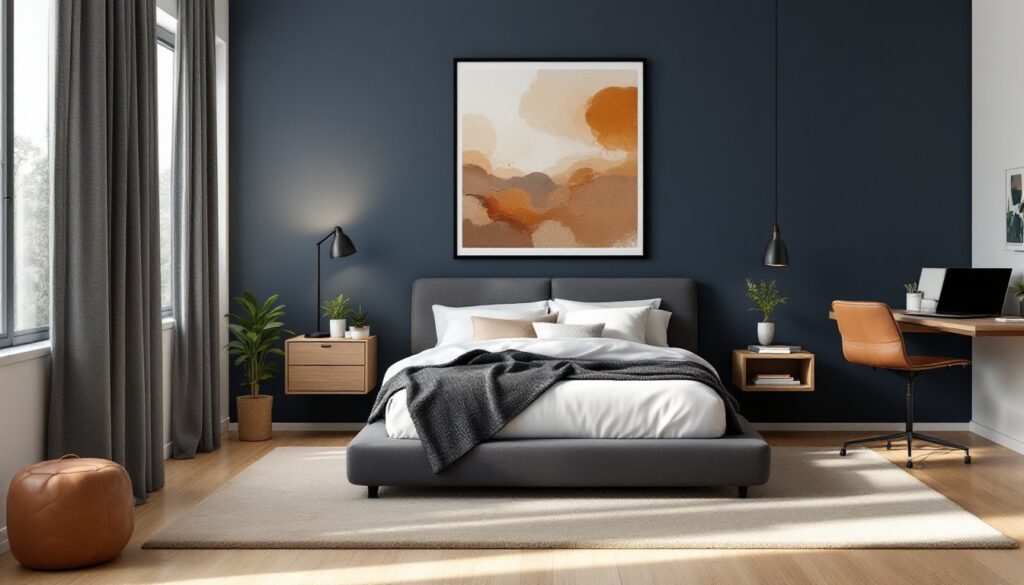
Color sets the entire tone, and most guys at 25 gravitate toward neutral, grounded palettes that feel intentional without being sterile. Charcoal gray, navy blue, deep olive, and warm taupe work as solid foundation colors for walls, either as full-room paint or as accent walls behind the bed.
Paint coverage typically runs 350–400 square feet per gallon, so a standard 12′ × 14′ bedroom with 8-foot ceilings needs about one gallon for two coats. Flat or matte finishes hide wall imperfections better, but eggshell offers easier cleaning, important for high-contact areas near light switches or desks.
Layering matters more than most DIYers realize. A dark wall works best when balanced with lighter bedding, wood tones, or strategic pops of color through artwork or textiles. Black can anchor a space when used on a single wall or in furniture, but painting all four walls dark makes most bedrooms feel cramped unless there’s ample natural light. For renters, peel-and-stick wallpaper or removable wall panels in wood tones or geometric patterns provide the same impact without losing a security deposit.
Avoid the trap of all-gray everything, it reads cold and generic. Mixing warm neutrals (tan, rust, camel) with cooler tones (slate, navy) adds depth and keeps the room from feeling like a hotel.
Essential Furniture Pieces That Maximize Style and Function
Furniture at this stage should be intentional, not just inherited or cheap. Start with a solid bed frame, platform frames with built-in storage or a simple upholstered headboard provide a clean, adult look without the college-dorm vibe of a metal frame. Queen-size mattresses (60″ × 80″) fit most bedrooms comfortably and leave room for nightstands without overwhelming the space.
A nightstand on each side keeps essentials within reach and balances the room visually. Aim for pieces with at least one drawer, open shelving collects clutter fast. Matching nightstands aren’t required: mixing materials (a wood stand on one side, a metal one on the other) can add visual interest if the heights and scale are similar.
Every 25-year-old needs a functional desk or workspace, even if it’s just a wall-mounted floating desk (typically 24–30 inches deep) or a compact writing table. If space allows, a dedicated dresser beats piling clothes on a chair. Look for pieces with dovetail drawer joints and solid wood or quality plywood construction, they’ll outlast particleboard by years.
Seating beyond the bed matters. A lounge chair or small bench at the foot of the bed gives the room a finished feel and provides a spot for reading, putting on shoes, or tossing a jacket that isn’t the floor. Avoid overstuffing the room, negative space makes everything look more intentional and higher-end.
Creating the Perfect Lighting Scheme for Ambiance and Productivity
Overhead lighting alone makes any bedroom feel flat and uninviting. Layering three types of light, ambient, task, and accent, is the difference between a space that works at all hours and one that only functions with the shades open.
Ambient lighting sets the baseline. If stuck with a builder-grade ceiling fixture, swap it for a modern flush-mount or semi-flush light with a dimmer switch. Installing a dimmer is a straightforward DIY (turn off the breaker, remove the old switch, connect the dimmer per the manufacturer’s diagram) and makes any fixture more versatile. Note that LED bulbs require LED-compatible dimmers to avoid flickering.
Task lighting covers work and reading. A desk lamp with adjustable arms and at least 450 lumens handles computer work without glare, while a swing-arm wall sconce or bedside table lamp (around 300–400 lumens) works for reading in bed. Avoid placing lamps directly in line with computer monitors, it creates glare.
Accent lighting adds depth and mood. LED strip lights behind a headboard, under floating shelves, or along the baseboards create indirect light that makes the room feel larger and more intentional. Smart bulbs (controlled via phone or voice) let him shift color temperature, cooler light (4000K–5000K) for focused work, warmer tones (2700K–3000K) for winding down.
Blackout curtains or cellular shades improve sleep quality and help control natural light, especially if he works odd hours or lives on a busy street.
Smart Storage Solutions to Keep Your Space Clutter-Free
Storage makes or breaks a bedroom’s functionality. Most guys at 25 own more than fits in a single dresser, shoes, tech gear, seasonal clothes, gym equipment, and random stuff that doesn’t have a home.
Under-bed storage is the easiest win. Platform beds with built-in drawers or rolling storage bins (6–8 inches tall) reclaim dead space. Use this for off-season clothing, extra bedding, or items that don’t need daily access. Bed risers can add another 3–5 inches of clearance under standard frames.
Closet organizers or modular systems (wire shelving, hanging rods, stackable cubes) double usable closet space without tools. A second hanging rod set 40 inches below the top rod creates space for shirts and pants while leaving room for longer items on one side. Adding shelf dividers keeps folded clothes from toppling.
Wall-mounted hooks, floating shelves, and pegboards turn vertical wall space into functional storage for hats, bags, headphones, or keys. Install shelves into wall studs using a stud finder and appropriate screws, drywall anchors work for lightweight decor but not for anything holding real weight. Studs are typically spaced 16 inches on center in most residential construction.
A storage bench or ottoman with lift-top storage at the foot of the bed hides clutter while providing seating. Avoid open storage systems that turn into visual clutter, drawers, bins, and cabinets with doors keep the room looking clean even when life gets messy.
Adding Personal Touches: Wall Art, Decor, and Statement Pieces
A bedroom without personal touches feels like a staged listing. This is where individual style actually shows up, but it should feel curated, not chaotic.
Wall art makes the biggest visual impact. Framed prints, canvas art, or a gallery wall work well, but scale matters. A piece hung above a queen bed should be at least 2/3 the width of the headboard to feel proportional, too small, and it looks like an afterthought. Hang art so the center sits at eye level (around 57–60 inches from the floor). Use a level and painter’s tape to mock up placement before putting holes in the wall.
Avoid generic motivational posters or overly busy gallery walls with mismatched frames. Black or natural wood frames in consistent sizes create cohesion. Photography, abstract prints, maps, vintage concert posters, or framed album covers reflect personality without veering into dorm-room territory.
Statement pieces, a unique floor lamp, a textured rug, an accent chair in leather or velvet, add character without clutter. Area rugs warm up hard floors and define zones: aim for a rug that extends 18–24 inches beyond the sides and foot of the bed to anchor the space.
Plants bring life into a room and improve air quality. Low-maintenance options like snake plants, pothos, or ZZ plants tolerate low light and irregular watering. Keep decor purposeful, every item should either serve a function or have a story. Three intentional pieces beat a dozen random ones.
Tech Integration and Entertainment Setup Ideas
Most 25-year-olds spend significant time in their bedrooms working, gaming, or streaming content, so tech integration should be intentional and clean, not a mess of visible cords and mismatched gear.
For a TV or monitor setup, wall-mounting saves space and looks cleaner than a bulky media console. Use a tilting or full-motion mount rated for the screen’s weight, and always anchor it to wall studs, not just drywall. Run cables through the wall using an in-wall cable management kit (low-voltage wiring doesn’t require an electrician in most areas, but check local codes). If wall-mounting isn’t an option, a low-profile media stand with built-in cable management keeps cords hidden.
Charging stations prevent the nightstand from becoming a tangle of cables. A multi-device charging dock or a small power strip with USB ports mounted to the back of the nightstand or desk keeps phones, watches, and headphones organized and powered.
For gaming or home office setups, cable raceways, under-desk cable trays, or velcro cable ties prevent the spaghetti-wire look. Route power and data cables separately when possible to reduce interference.
Smart home integration, voice assistants, smart lights, smart plugs, or a smart thermostat, adds convenience without complexity. Consolidating control through one ecosystem (Google, Alexa, or Apple HomeKit) simplifies daily use. Soundproofing improvements like weatherstripping on doors, acoustic panels, or heavy curtains matter if he games late, takes calls, or lives with roommates.
Conclusion
Building a bedroom that actually works at 25 comes down to intentional choices, grounded color palettes, functional furniture, layered lighting, smart storage, personal decor, and thoughtful tech integration. It’s not about perfection or filling every corner: it’s about creating a space that reflects how he actually lives, whether that’s working from home, unwinding after long days, or hosting friends. These upgrades don’t require a full renovation, just a clear plan and a willingness to move past cheap fixes and into choices that’ll hold up for years.