A back patio without cover means broiling sun in July, soggy furniture after spring storms, and a whole lot of unused square footage. Adding a patio cover transforms outdoor space into functional, comfortable living area, protecting people, furniture, and investments from the elements. Whether someone is grilling, hosting, or just trying to keep the dog out of the heat, the right cover makes a patio usable nearly year-round. From permanent structures that add resale value to budget-friendly temporary options, there are solutions for every style, climate, and skill level. This guide walks through 15 practical patio cover ideas, covering materials, installation realities, and what actually works in real backyards.
Key Takeaways
- Back patio cover ideas range from permanent structures like wooden pergolas and aluminum covers to temporary options like shade sails and retractable awnings, each suited to different budgets and climates.
- A patio cover protects furniture, extends usable seasons, reduces cooling costs, and can return 50–80% of its investment at resale, making it a high-value home improvement.
- Budget matters: small, well-built covers ($200–$1,000) beat large flimsy ones, and DIY installation on mid-range builds ($1,500–$5,000) saves 40–60% compared to contractor pricing.
- Permanent covers like wood pergolas require permits, proper post footings (24–36 inches deep), and regular maintenance (staining every 2–3 years), while aluminum and metal covers offer durability with minimal upkeep.
- Match your patio cover style to your home’s architecture and climate—traditional homes suit wood pergolas, modern designs fit flat metal roofs and shade sails, and snow-prone regions need engineered structures with steep pitches to shed loads.
Why Your Back Patio Needs a Cover
Uncovered patios lose functionality fast. UV exposure fades outdoor cushions, cracks plastic furniture, and turns composite decking brittle over time. Rain soaks seating areas and creates standing water that breeds mosquitoes. In regions with heavy sun, concrete and pavers radiate heat well into the evening, making the space uncomfortable even after sunset.
A cover extends usable hours and seasons. It provides shade during peak sun, keeps rain off dining areas, and reduces cooling costs by blocking direct sunlight from hitting exterior walls and windows. For homeowners planning to sell, a well-built patio cover adds measurable curb appeal and can return 50–80% of its cost at resale, depending on the market.
From a structural standpoint, covers also protect the patio surface itself. Sealed wood stays sealed longer, and painted surfaces resist peeling when they’re not constantly battered by weather. Even simple shade cloth can add years to the life of outdoor furnishings.
Beyond function, a cover defines the space. It creates a psychological boundary between “yard” and “outdoor room,” making the area feel intentional and inviting. For DIYers, building or installing a patio cover is a high-impact project that delivers visible results and daily use.
Permanent Patio Cover Options for Year-Round Protection
Permanent covers require more upfront investment and often need permits, but they deliver long-term durability and weather resistance. These structures attach to the house or stand independently on posts, providing solid protection and often increasing property value.
Wooden Pergolas and Arbors
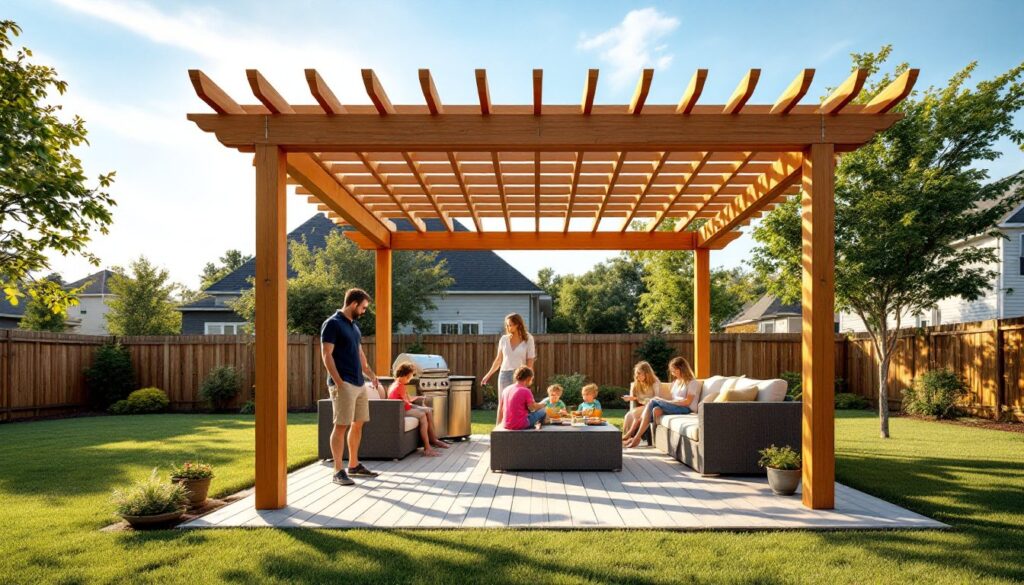
Wooden pergolas are the go-to for homeowners who want a blend of shade and style. Standard designs use 4×4 or 6×6 pressure-treated posts, 2×6 or 2×8 rafters, and 2×2 slats spaced 12–16 inches apart. Note that nominal 2×6 lumber actually measures 1.5″ × 5.5″. Spacing affects shade: tighter slats mean more coverage, but too tight and the structure feels closed in.
Cedar and redwood offer natural rot resistance and attractive grain, but they cost 2–3 times more than pressure-treated pine. For budget builds, PT lumber works fine: just plan to stain or seal it every 2–3 years to prevent graying and splitting.
Pergolas provide partial shade, around 30–50% coverage depending on slat spacing and sun angle. For more protection, homeowners often add retractable shade cloth, climbing vines (wisteria, jasmine, or grapevines), or clear polycarbonate panels on top. Panels add rain protection without losing light.
Installation is intermediate-level DIY. Expect to dig post holes 24–36 inches deep (below frost line in cold climates), pour concrete footings, and use a level and speed square to keep everything plumb and square. A miter saw is essential for clean angle cuts on rafters: a circular saw works but requires more cleanup.
Permits are usually required if the structure exceeds 200 square feet or attaches to the house. Check local zoning for setback rules, some municipalities require structures to sit at least 5 feet from property lines.
Arbors are smaller, typically freestanding, and often frame entryways or seating nooks rather than covering an entire patio. They’re quicker to build and rarely need permits, but they don’t provide wide coverage.
Aluminum and Metal Patio Covers
Aluminum patio covers are the workhorse option: low maintenance, durable, and available in dozens of colors and finishes. Factory-painted aluminum resists rust, doesn’t need staining, and can last 20+ years with minimal upkeep. Most systems use extruded aluminum beams and posts with snap-together panels, making installation faster than wood.
These covers provide full rain and sun protection. Solid panels block 100% of UV, and many include built-in gutters and downspouts to manage runoff. For DIYers, kit systems from manufacturers like Alumawood or Duralum come pre-cut with instructions, though installation still requires accurate leveling, ledger board attachment (if mounting to the house), and proper flashing to prevent water intrusion.
Attaching a ledger board to the house requires locating studs or using structural anchors, and it must be flashed correctly per IRC guidelines to avoid rot or leaks. If the homeowner isn’t confident in ledger attachment, hiring a contractor for that step, then doing the rest themselves, is a smart compromise.
Steel and powder-coated metal covers offer modern aesthetics and can span longer distances without mid-span posts. They’re heavier and more expensive but handle snow loads better in northern climates. Corrugated metal roofing (galvanized or Corten steel) gives an industrial look and pairs well with contemporary landscaping.
Metal covers amplify rain noise, which some homeowners love and others find annoying. Adding foam insulation strips between panels reduces drumming. In hot climates, metal roofs radiate heat downward unless they’re insulated or painted with reflective coatings.
Flexible and Temporary Patio Cover Solutions
Not every homeowner wants to pour footings or pull permits. Temporary and flexible covers suit renters, short-term needs, or anyone testing layout before committing to permanent construction.
Retractable awnings mount to exterior walls and extend with a hand crank or motor. Fabric canopies (usually solution-dyed acrylic) provide 90–95% UV block and retract when not in use. Quality awnings cost $800–$3,000 depending on width and motor options. Installation requires anchoring into wall studs or masonry: toggle bolts won’t hold. Awnings work well over doors and narrow patios but can’t span large areas without sagging.
Shade sails use tensioned fabric panels anchored to posts, walls, or trees. They’re the most affordable option for DIY shade, $50–$200 for the sail itself, plus hardware. The key is creating proper tension: sails must be angled to shed water and pulled tight to prevent sagging and flapping in wind. Use stainless steel turnbuckles and heavy-duty eye bolts rated for outdoor use. HDPE shade cloth (not cheap polyester) lasts 5–10 years and blocks 85–95% of UV.
Shade sails give modern, sculptural looks but require anchor points that can handle lateral loads, usually 4×4 posts set in concrete or lag bolts into structural framing. Renters can sometimes use existing structures if approved by landlords.
Pop-up canopies and gazebos offer instant shade for events but aren’t durable enough for permanent installation. Frames rust, fabric tears, and stakes pull out in moderate wind. Fine for parties: not for year-round use.
Outdoor curtains and privacy screens add flexible shade and wind protection to existing structures. Mount them on pergolas or under awnings using stainless steel or galvanized cable with curtain clips. Sunbrella and Outdura fabrics resist fading and mildew. Curtains soften spaces and provide adjustable coverage, but they need to be tied back or removed in high wind.
Umbrellas remain the easiest shade option: no installation, movable, and available in cantilever designs that shade large areas. Use a weighted base (at least 75 lbs for 9-foot umbrellas, 100+ lbs for cantilever models) or bolt the pole into the patio surface. Umbrellas don’t handle wind well and need to be closed and stored during storms.
Choosing the Right Patio Cover for Your Budget and Style
Budget dictates scope but shouldn’t determine quality. A small, well-built pergola beats a large, flimsy structure every time.
Budget-conscious options ($200–$1,000) include shade sails, DIY pergola kits with economy lumber, and retractable canopies. These work for renters or homeowners testing configurations before investing more.
Mid-range builds ($1,500–$5,000) cover custom wood pergolas, aluminum patio cover kits, and motorized awnings. This range offers durability and enough customization to match the home’s architecture. DIY labor saves 40–60% compared to contractor pricing.
High-end installations ($5,000–$15,000+) include large attached structures, insulated roofing, integrated lighting and fans, and custom metalwork. These often require engineers, permits, and professional installation, especially if electrical or structural modifications are involved.
Style should complement the house. Traditional homes pair well with wood pergolas and classic gable-roof covers. Modern designs suit flat metal roofs, shade sails, and clean-lined aluminum. Rustic or farmhouse aesthetics work with rough-sawn timber or corrugated metal.
Climate matters. In the Southwest, solid roofs and UV-blocking materials are essential: in the Pacific Northwest, pitched roofs with gutters handle constant rain: in snow-prone regions, structures need engineered load ratings and steep pitches to shed snow (typically 4:12 slope or greater).
Homeowners should also consider future use. Planning to add screens, ceiling fans, or outdoor kitchens? Build or choose a cover that can support added weight and wiring. Running electrical conduit during initial construction is far easier than retrofitting later.
Conclusion
The right patio cover turns wasted outdoor space into a functional extension of the home. Whether it’s a simple shade sail or a full aluminum roof, the key is matching the solution to the site, budget, and intended use. Start with a clear plan, don’t skip the prep work, and build or install with weather and longevity in mind. With the right cover, that back patio becomes usable in July heat, spring rain, and every season in between.