Adding a couch to a bedroom isn’t just a luxury hotel trick, it’s a practical way to carve out a functional zone for reading, getting dressed, or scrolling through the morning news without messing up the bed. Bedrooms with square footage to spare often feel incomplete, and a well-chosen couch fills that awkward corner or empty wall while adding usable seating. But not every sofa belongs in a sleeping space. Size, scale, and layout matter just as much as style. This guide breaks down the best couch types, placement strategies, and design tips to help homeowners make the most of bedroom real estate without cramping the room or clashing with existing decor.
Key Takeaways
- A bedroom couch creates a functional zone separate from the bed, keeping bedding clean while providing practical seating for reading, getting dressed, or folding laundry.
- Loveseats and settees (52–64 inches wide) are ideal for most standard bedrooms, while chaise lounges offer luxurious relaxation with full leg support for reading or stretching.
- Bedroom couch placement options include at the foot of the bed, under windows for natural light, in corners to define sitting areas, or angled at 45 degrees in square rooms for visual interest.
- Match couch upholstery to existing textiles or use intentional contrast—pair neutral bedding with saturated colors like navy or emerald for a cohesive bedroom couch design.
- Scale and clearance are critical: use painter’s tape to mock up the couch footprint and ensure at least 24–36 inches of navigation space around the piece.
- Add task lighting like floor lamps or wall sconces next to the bedroom couch to make it functional after dark without relying solely on overhead lighting.
Why Add a Couch to Your Bedroom?
A bedroom couch creates a distinct zone separate from the bed, which keeps bedding cleaner and extends the room’s function beyond sleep. It’s a staging area for folding laundry, laying out tomorrow’s outfit, or putting on shoes without sitting on freshly made sheets. For couples, it offers a neutral spot for morning coffee or late-night conversation that doesn’t involve climbing into bed.
From a design perspective, a couch anchors large bedrooms that feel echoey or underfurnished. Master suites with sitting areas, bay windows, or fireplaces benefit from defined furniture groupings, and a couch provides that visual weight. It also works in smaller rooms if chosen carefully, compact styles like loveseats or backless benches add seating without the bulk of a full-size sofa.
Practical benefits include extra guest sleeping (some couches convert or accommodate overnight visitors in a pinch) and a place to toss throw pillows that would otherwise pile up on the bed. It’s not essential, but it’s one of those upgrades that quietly improves daily routines once it’s in place.
Best Couch Styles for Bedrooms
Loveseats and Settees for Compact Elegance
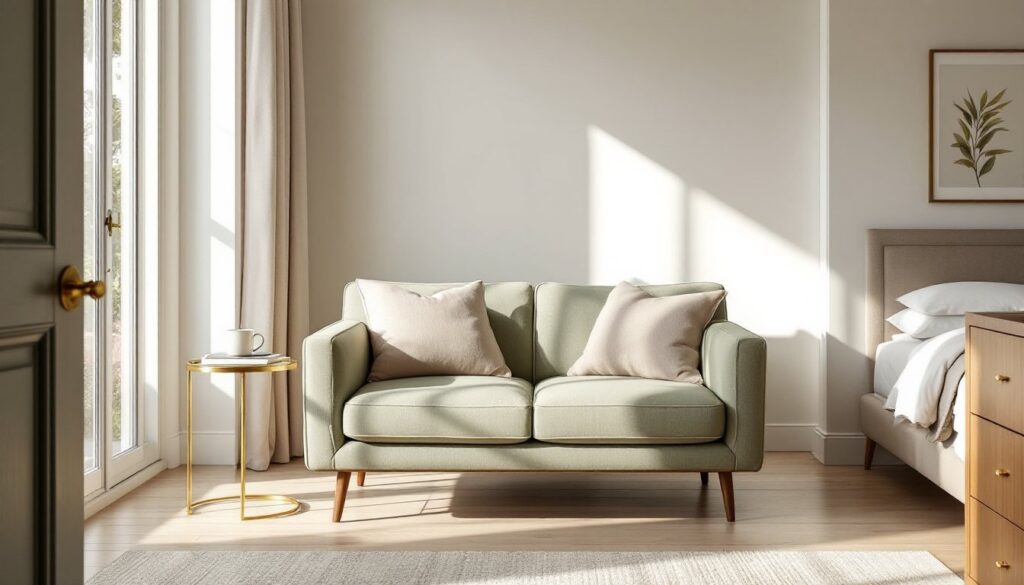
Loveseats (typically 52–64 inches wide) fit most standard bedrooms without overwhelming the floor plan. They’re wide enough for two people but narrow enough to tuck against a wall, under a window, or at the foot of the bed. Look for models with exposed wood legs, they create visual breathing room underneath, which helps smaller spaces feel less crowded.
Settees are slightly more formal, often featuring upright backs, turned legs, and tighter upholstery. They work well in traditional or transitional bedrooms and pair naturally with vintage nightstands or tufted headboards. Width runs narrower than a loveseat (45–55 inches), making them ideal for tight spots or narrow bedroom alcoves.
Both styles come armless, which shaves off 4–6 inches per side, worth considering if the couch will sit between two pieces of furniture or in a shallow nook. Upholstery matters more in bedrooms than living rooms since the couch will face less traffic. Linen, cotton blends, and performance fabrics hold up well and won’t trap heat like leather or synthetic velvet.
Chaise Lounges for Luxurious Relaxation
A chaise lounge is the most bedroom-appropriate seating option if the goal is true relaxation. The extended seat supports legs fully, which beats perching on a standard sofa for reading, stretching, or scrolling. Chaises range from minimalist daybeds (no back, all cushion) to high-backed lounge chairs with built-in lumbar support.
Placement is key. Chaises work best near windows for natural light or angled toward a fireplace or TV. They take up roughly 60–72 inches in length, so measure the intended spot before buying. Left-arm and right-arm versions exist, choose based on how the piece will face the room.
Materials like teak, rattan, or cane add texture and suit bohemian or coastal bedroom styles. Upholstered chaises in velvet or bouclé lean contemporary or glam. Avoid overstuffed models with thick rolled arms, they eat up space and look heavy in a bedroom context. Slim silhouettes with metal or tapered wood frames read more elegant and less living-room bulky.
Placement Ideas to Maximize Your Bedroom Layout
At the foot of the bed: Classic hotel layout. Works in rooms with at least 24 inches of clearance between the bed and the wall opposite. This setup needs a low-profile couch (under 32 inches tall) so it doesn’t block the view or feel like a barricade. Benches or backless settees fit here better than full-height sofas.
Under a window: Ideal for bedrooms with bay windows, picture windows, or any sill at sitting height (roughly 18–24 inches off the floor). A loveseat or chaise here creates a natural reading nook. Add a small side table and a floor lamp to make it functional day and night. Check window trim depth, some older homes have deep sills that prevent furniture from sitting flush against the wall.
In a corner: Use an L-shaped sectional or pair a small sofa with an accent chair to define a sitting area. This works in larger master suites (14×16 feet or bigger) where there’s room for distinct zones. Anchor the grouping with an area rug (5×7 or 6×9 depending on furniture size) to visually separate it from the sleeping area.
Against a blank wall: If the bedroom has an empty stretch of wall opposite the closet or adjacent to the door, a couch there balances the room and provides a landing spot for bags, shoes, or folded clothes. Hang artwork or a mirror above to tie it into the overall design.
Angled in a corner: Instead of pushing a chaise or loveseat flat against two walls, float it at a 45-degree angle. This softens rigid layouts and works especially well in square bedrooms. It does eat more floor space, so it’s better suited to rooms over 12×12 feet.
Design Tips for Coordinating Your Bedroom Couch
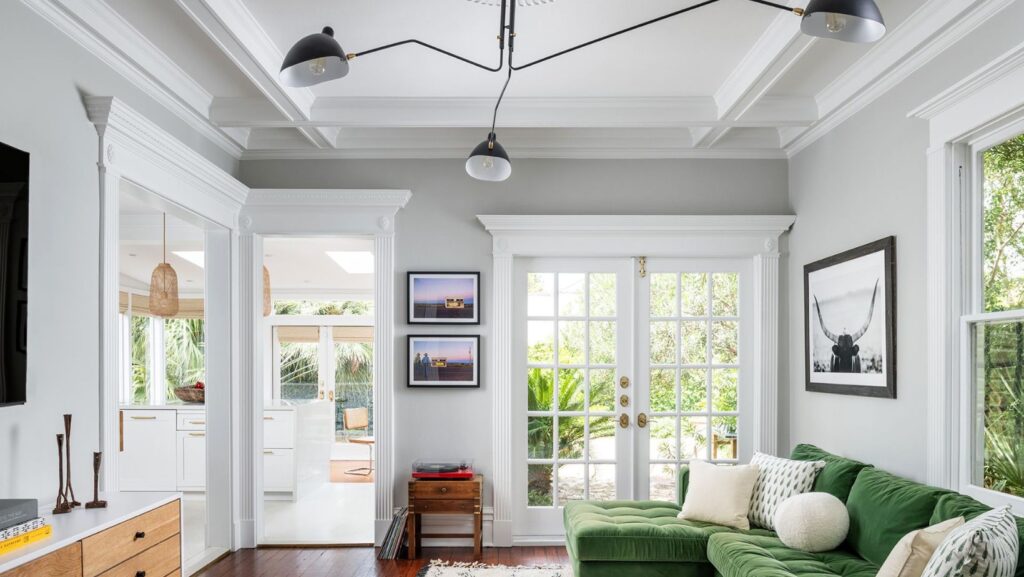
Match upholstery to existing textiles, or contrast intentionally. If bedding leans neutral (white, beige, gray), a couch in a saturated color (navy, emerald, rust) adds a focal point without clashing. If the room already has patterned curtains or a bold duvet, keep the couch solid and understated.
Consider leg finish and hardware. Wood tones should coordinate with the bed frame, nightstands, and dresser. A couch with walnut legs looks off next to a blonde oak bed. Metal legs (brass, black steel, chrome) offer more flexibility and suit mid-century modern or industrial bedroom styles.
Scale matters as much as style. A bulky sectional in a 10×12 bedroom will dominate and make movement awkward. Use painter’s tape on the floor to mock up the couch footprint before buying. Walk around it, there should be at least 24–36 inches of clearance on all sides for comfortable navigation.
Add complementary accessories sparingly. A throw blanket and one or two accent pillows are enough. Bedrooms already have layered textiles, so overdoing it on the couch creates visual clutter. Choose pillow fabrics that echo the bedding, linen on linen, velvet on velvet, for a cohesive look.
Lighting makes or breaks a bedroom couch setup. A floor lamp or swing-arm wall sconce next to the couch makes it usable after dark. Overhead lighting alone casts shadows and feels too general. Aim for task lighting with a warm color temperature (2700–3000K) to keep the space restful.
Storage underneath can be a smart move. Some loveseats and settees come with built-in drawers or lift-up seats. This works well in smaller bedrooms where closet space is tight. Just make sure the mechanism is solid, cheap hydraulic lifts fail fast and turn into a hassle.
Conclusion
A bedroom couch doesn’t have to be a splurge or an afterthought, it’s a functional piece that earns its footprint when chosen and placed with intention. Whether it’s a compact loveseat at the foot of the bed or a chaise by the window, the right seating transforms dead space into a purposeful zone for daily use. Measure carefully, match the style to the room’s scale, and don’t skip the lighting.