A well-designed deck does more than extend living space, it transforms how a home interacts with the outdoors. Whether replacing an aging structure or building from scratch, homeowners have more design options than ever, from composite materials that mimic exotic hardwoods to integrated lighting systems that extend usability into the evening. The best deck designs balance aesthetics with function, incorporating features that suit how the space will actually be used. This guide walks through proven ideas that elevate curb appeal and create outdoor areas worth spending time in, covering everything from multi-level layouts to material choices that hold up under real-world conditions.
Key Takeaways
- Beautiful deck ideas balance aesthetics with function, using multi-level layouts and strategic material choices to create outdoor spaces that complement your home’s architecture.
- Multi-level decks add visual interest and create distinct zones for dining, lounging, and entertaining without requiring walls or extensive structural modifications.
- Color and stain choices significantly impact the overall look—lighter tones brighten and reflect heat, while darker composites create contrast and anchor the outdoor space.
- Built-in features like benches, planters, coolers, and bar tops eliminate clutter and integrate seamlessly into the deck design while improving functionality.
- Deck lighting transforms your space into an evening destination with recessed lights, post caps, string lights, and under-rail LEDs that provide both safety and ambiance.
- Composite decking offers lower maintenance and modern aesthetics compared to natural wood, though pressure-treated pine with composite boards provides the best budget-conscious balance.
Multi-Level Decks for Added Dimension and Visual Interest
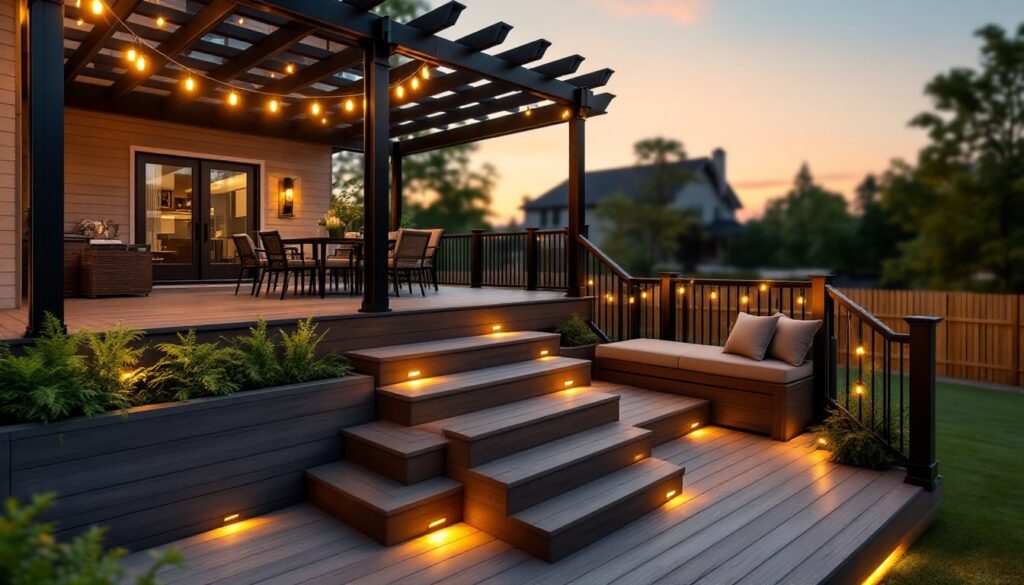
Multi-level decks break up large footprints and create distinct zones without walls. A upper level might host dining furniture while a lower tier houses lounge seating or a fire pit. The elevation change adds architectural interest and works especially well on sloped lots, where stepping down follows the natural grade instead of fighting it with tall support posts.
Framing a multi-level deck requires careful planning. Each level needs its own ledger board (if attached to the house), joist system, and proper flashing to prevent water infiltration. Steps between levels should follow IRC guidelines: risers between 4 and 7¾ inches, treads at least 10 inches deep. Handrails become mandatory when the elevation difference exceeds 30 inches in most jurisdictions.
Material costs run higher than single-level builds due to additional framing lumber, fasteners, and the increased complexity of the layout. But, the trade-off is a deck that feels more like an integrated outdoor room system. Pressure-treated southern yellow pine works for framing (actual dimensions: a 2×8 joist measures 1½” × 7¼”), while decking boards can mix materials, composite on high-traffic upper levels, cedar on lower lounging areas, to manage budget without sacrificing the overall look.
Permit requirements vary, but any deck over 30 inches above grade typically needs one, and multi-level designs often trigger plan review. Consult local building departments early.
Stunning Color and Stain Choices That Make a Statement
Deck color sets the tone for the entire outdoor space. Lighter tones, grays, tans, weathered driftwood shades, brighten areas and reflect heat, a practical choice in sun-heavy climates. Darker stains and composite colors (charcoal, walnut, espresso) create contrast against lighter siding and make the deck feel like a grounded anchor rather than an afterthought.
Semi-transparent stains let wood grain show through and require reapplication every 2–3 years depending on UV exposure. Solid-color stains offer more UV protection and last 4–5 years but obscure the grain entirely, functioning more like thin paint. For natural wood decks, oil-based stains penetrate deeper but take longer to dry: water-based versions clean up easier and have lower VOC levels.
Composite decking comes in a wider palette now, not just brown and gray. Manufacturers offer multi-tonal boards that mimic natural wood variation, and some lines include colors like coastal blue-gray or warm terracotta. The color is molded into the material, so it won’t peel, though it will fade slightly over the first few seasons before stabilizing.
Two-tone decks, a darker perimeter with lighter field boards, or alternating plank colors, add visual interest without additional cost beyond planning the layout. Just ensure the pattern doesn’t create a busy look that competes with furniture and planters.
Always test stain on scrap wood or an inconspicuous board. The same stain looks different on pine versus cedar, and even composite sample chips don’t always match the full-board appearance under natural light.
Outdoor Living Room Decks With Cozy Seating Areas
Outdoor living rooms extend the home’s footprint and get used more than generic open decks. The key is defining the space like an interior room: a focal point (fireplace, view, or water feature), arranged seating that encourages conversation, and weatherproof materials that don’t require constant shuffling indoors.
Built-in benches along the perimeter save floor space and double as storage if designed with hinged tops. Frame them with the same lumber as the deck structure, then clad with decking boards or add cushions cut to fit. Include backs for comfort, 16–18 inches high is standard.
An outdoor rug defines the seating zone and softens the look, but choose one rated for exterior use (polypropylene holds up better than natural fibers). Anchor furniture so it doesn’t shift in wind: heavier sectionals work better than lightweight aluminum chairs that skitter across boards.
Overhead structure matters. A pergola provides partial shade and a framework for string lights or climbing vines, though it won’t keep rain off. Retractable awnings offer weather protection but require mounting to the house or freestanding posts rated for wind load.
Power outlets and exterior-rated fans improve usability. Running electrical requires a licensed electrician in most areas and adds to the budget, but the convenience of plugging in speakers or charging devices makes the space genuinely livable. Plan outlet placement during framing, not as an afterthought.
Incorporating Built-In Features for Function and Beauty
Built-in features eliminate clutter and integrate seamlessly into the deck’s design. Planters framed into the railing or corners bring greenery without tripping hazards from scattered pots. Line them with pond liner or heavy-duty plastic to protect the wood framing, and ensure drainage holes prevent waterlogging.
Benches with storage underneath handle cushions, grilling tools, or pool toys. Hinge the seat with exterior-grade hardware and add a soft-close mechanism to avoid pinched fingers. Size the box to fit standard storage bins for easier organization.
Bartops or serving counters attached to the railing create a spot for drinks and plates during gatherings. Frame them at 42 inches high (standard bar height) and use the same decking material for a cohesive look, or top with outdoor-rated tile or stone for contrast.
Integrated coolers or ice bins built into the deck surface keep drinks cold without a bulky cooler taking up space. These require a weathertight liner (stainless steel or heavy plastic tubs work) and a drainage plan, a small hole draining to the ground below is the simplest solution.
All built-ins add weight and complexity to the structure. Ensure joists and beams are sized appropriately: a heavy planter box might require doubled joists or blocking underneath. Consult the IRC deck construction guide or a structural engineer if the design involves significant added loads.
Deck Lighting Ideas That Create Ambiance After Dark
Lighting transforms a deck from a daytime-only space into an evening destination. Recessed deck lights mounted flush in stair risers or along the perimeter provide safety without glare. Low-voltage LED systems (12V or 24V) are DIY-friendly and energy-efficient, running off a transformer plugged into a GFCI-protected outlet.
Post cap lights sit atop railing posts and cast a soft downward glow. Solar versions require no wiring but depend on sun exposure to charge: hardwired LEDs offer consistent brightness. Match the cap size to post dimensions (4×4 or 6×6 nominal).
String lights add a festive, casual feel. Use outdoor-rated LED strands (not indoor Christmas lights) and support them on sturdy hooks, a pergola frame, or dedicated poles. Avoid overloading circuits, check the transformer or outlet capacity before daisy-chaining multiple strands.
Under-rail lighting uses LED strips mounted beneath the top rail or bottom of the railing balusters, creating a floating effect. This works best on cable or glass railing systems where the light isn’t blocked by solid pickets.
For dining areas, consider a pendant light or chandelier rated for wet locations. These require an electrical box mounted securely to overhead framing and often need professional installation to meet code.
Dimmers and timers make lighting more flexible. A manual dimmer lets users adjust brightness for intimate dinners versus larger gatherings: a timer or smart switch automates the system so lights turn on at dusk without anyone remembering to flip a switch.
Natural Wood vs. Composite Decking: Which Looks Best?
The natural wood versus composite debate hinges on aesthetics, maintenance tolerance, and budget. Pressure-treated pine is the most affordable option, running $2–$4 per linear foot for 5/4×6 deck boards. It weathers to silver-gray without stain or can be stained and sealed for color retention. Expect to restain every 2–3 years and replace boards damaged by rot or insect activity over time.
Cedar and redwood offer natural rot resistance and rich color, reddish-brown for redwood, warm tan for cedar. They cost $4–$8 per linear foot and still require sealing to prevent UV fading and moisture damage. The grain and natural variation give an organic, high-end look that composites can’t fully replicate.
Composite decking (brands like Trex, TimberTech, Fiberon) blends wood fiber and plastic, resisting rot, splintering, and insect damage. It costs $5–$12 per linear foot depending on the product line. Early composites looked obviously fake, but newer capped versions mimic wood grain convincingly, with multi-tonal colors and varied plank widths.
Composite never needs staining but will fade slightly during the first year or two. It stays cooler underfoot than dark-stained wood in direct sun and doesn’t splinter, a plus for barefoot traffic. But, scratches show more on darker colors, and some products can feel slippery when wet.
Installation differs slightly: composite boards expand and contract more than wood, requiring specific gap spacing (typically ⅛ inch). Hidden fastener systems create a clean look with no visible screws but add labor time. Wood decking uses standard deck screws or nails driven through the board face.
For budget-conscious builds, pressure-treated framing with cedar or composite decking boards balances cost and appearance, no one sees the joists once the deck is finished.
Conclusion
A beautiful deck comes down to thoughtful planning and choosing features that match how the space will be used. Multi-level layouts, strategic lighting, and built-in elements elevate the design beyond a simple platform. Material choices, whether natural wood or composite, affect both appearance and long-term maintenance. Prioritize structural soundness and code compliance first, then layer in the aesthetic details that make the space inviting. The result is an outdoor area that adds real value and gets used year-round.