Designing a bedroom for a boy means balancing function, personality, and longevity. Unlike adult spaces, kids’ rooms need to handle everything from assignments and Lego builds to weekend sleepovers and evolving tastes. The best designs adapt as interests shift, from dinosaurs to basketball to coding marathons, without requiring a full gut job every two years. This guide walks through proven layouts, color schemes, and storage strategies that work for toddlers through teens. No fluff, no vague mood boards, just practical ideas backed by real-world use.
Key Takeaways
- Bedroom ideas for boys work best with neutral base colors and removable accents, allowing rooms to adapt as interests evolve from toddlerhood through teens without costly redesigns.
- Themed designs succeed when they use swappable elements like bedding and posters rather than permanent fixtures, preventing quick obsolescence as preferences shift.
- Smart storage systems including under-bed rolling drawers, pegboards, and toy rotation strategies reduce clutter while keeping frequently used items visible and accessible to kids.
- Functional bedroom layouts require defined study and play zones with proper desk positioning, task lighting (450+ lumens), and flexible furniture like modular foam seating.
- Solid wood furniture and convertible beds outlast cheaper alternatives, saving money over time while supporting growth from early childhood through the teen years.
- Involving children in design decisions fosters ownership of their bedroom space and encourages them to maintain cleanliness and organization.
Choosing the Right Color Palette Beyond Blue
Blue walls remain popular, but limiting a boy’s room to one color misses opportunities for depth and flexibility. Neutral bases, gray, tan, or warm white, let accent colors rotate as interests change. A gray wall anchors a room whether the bedding features soccer balls or Star Wars.
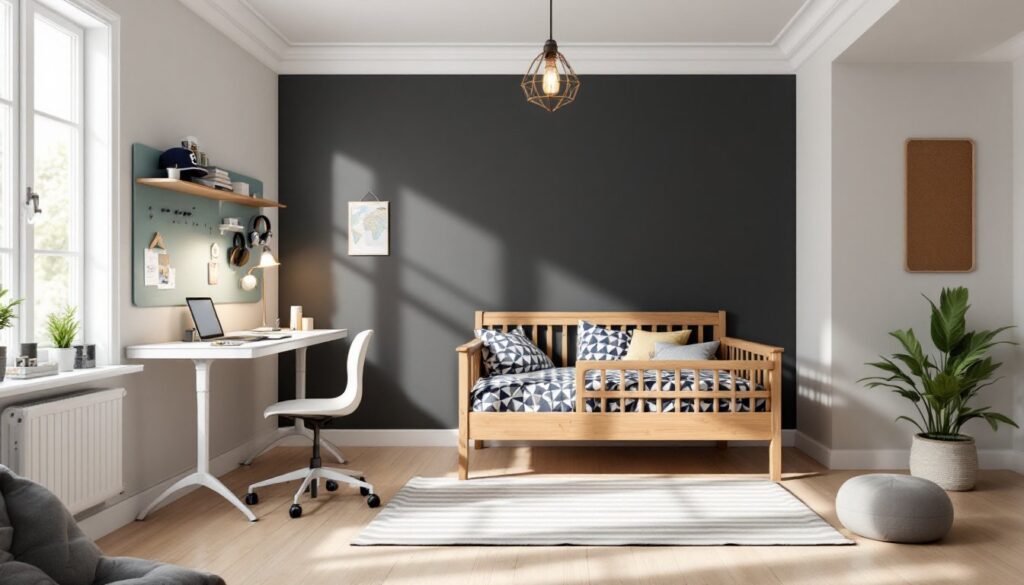
Darker tones like charcoal, navy, or forest green work well in rooms with ample natural light. They hide scuffs better than pale shades and create a mature backdrop that doesn’t scream “little kid.” Pair dark walls with white trim and light-colored furniture to prevent a cave-like feel.
Accent walls offer compromise. Paint three walls neutral and one in a bold color, orange, red, or teal. This approach contains the visual intensity while adding personality. Peel-and-stick wallpaper provides another option for renters or parents wary of commitment: patterns like geometric shapes, maps, or industrial grids add interest without overwhelming the space.
Avoid all-white schemes in high-traffic kids’ rooms. Walls take abuse from sports gear, backpacks, and general roughhousing. Semi-gloss or satin finishes in any color clean more easily than flat paint. Budget roughly 350-400 square feet of coverage per gallon for typical bedroom dimensions, accounting for two coats.
Color psychology plays a role but shouldn’t dominate decisions. Calmer blues and greens may promote relaxation, while yellows and oranges energize. The key is balancing the child’s preference with practical maintenance and long-term versatility.
Theme-Based Bedroom Ideas That Inspire
Themed rooms succeed when they suggest rather than dictate. Heavy themes, licensed character decals covering every surface, date quickly and cost money to undo. Smart themes use adaptable elements: bedding, posters, and accessories that swap out as interests evolve.
Sports and Adventure Themes
Sports themes work across age ranges. Instead of team-specific paint (which becomes a problem if allegiances shift), use neutral walls and rotate team gear through removable decor. Mount a floating shelf or pegboard system to display jerseys, caps, or equipment. A cork board or magnetic strip lets kids arrange their own collections.
For multi-sport enthusiasts, consider an equipment storage wall: hooks mounted on 16-inch on-center stud spacing (standard wall framing) hold bats, rackets, and helmets. Use heavy-duty wall anchors rated for 50+ pounds if studs aren’t conveniently located. Label hooks with vinyl letters or printed tags, it encourages kids to actually hang things up.
Adventure and outdoor themes translate well with maps, camping-inspired textiles, and industrial lighting. A world map mural or large framed topographic print adds visual weight without committing to a cartoon aesthetic. Rope lighting or Edison-style bulbs in cage fixtures provide functional task lighting with thematic tie-in.
Space, Science, and Tech-Inspired Designs
Space themes have staying power because they span toddler fascination through teen STEM interests. Wall decals of planets scale easily, use a projector to trace and paint if permanent art is preferred. Glow-in-the-dark paint or stickers applied to ceilings create constellations visible at bedtime: brands like Rust-Oleum Glow-in-the-Dark work on most surfaces with proper prep.
Chalkboard or dry-erase paint turns one wall into a working surface for sketches, equations, or game scores. Apply according to manufacturer directions, most require 48-72 hours of cure time before use. Pair with a magnetic primer coat underneath to create a dual-function board.
Tech-inspired rooms benefit from built-in charging stations. Install a power strip with USB ports inside a nightstand or desk drawer (ensure it’s UL-listed). Run cables through desk grommets to reduce visual clutter. LED strip lighting behind shelves or under bed frames adds modern flair: choose tunable white or RGB models for flexibility. Always follow NEC guidelines when adding electrical outlets, consult a licensed electrician if running new circuits.
Smart Storage Solutions for Active Boys
Kids’ rooms generate chaos. Effective storage isn’t about buying more bins, it’s about designing systems that match how children actually use the space.
Under-bed storage captures wasted vertical space. Rolling drawers or low-profile bins (6-8 inches tall) slide beneath most bed frames. Platform beds with built-in drawers cost more upfront but eliminate the need for a separate dresser. Ensure drawers have smooth-gliding hardware and soft-close mechanisms: cheap slides jam and frustrate kids into abandoning the system.
Closet optimization matters more than closet size. Install a double-hang rod system: one rod at 40 inches for shirts and jackets, a second at 80 inches for out-of-season or formal items. Kids under ten can’t reliably reach the upper rod, use it for parent-controlled storage. Add wire shelving or cubby organizers to one side for folded clothes, reducing dresser footprint.
Open shelving beats closed cabinets for frequently accessed items. Kids won’t use what they can’t see. Mount heavy-duty brackets into studs (not just drywall anchors) for shelves holding books or collections. Space shelves 10-12 inches apart for standard books: sports trophies or larger toys need 14-16 inches.
Toy rotation systems keep clutter in check. Dedicate storage bins or clear containers (labeled with pictures for younger kids) to categories: building blocks, action figures, art supplies. Keep half in the room, half in basement or garage storage. Swap monthly. This reduces overwhelm and makes cleanup manageable.
Pegboards and wall grids adapt as interests change. Mount a 4×4-foot pegboard with standard 1/4-inch holes to hold hooks, baskets, and shelves. Paint it an accent color or leave natural. As Lego gives way to gaming headsets, the same board reconfigures without new holes in the wall.
Creating Functional Study and Play Zones
Multi-use bedrooms need defined zones. Without physical or visual boundaries, assignments spreads across play areas and vice versa.
Desk placement affects focus. Position desks facing a wall or window, not the bed, reduces distraction. Ensure adequate natural light or add a task lamp with 450+ lumens (equivalent to 40-60 watt incandescent). Adjustable-height desks grow with the child: look for models that shift from 22 to 30 inches in height. Pair with an ergonomic chair that supports proper posture, seat height should let feet rest flat with knees at 90 degrees.
Desk depth matters for assignments setups. A 24-inch deep surface accommodates a laptop, notebook, and elbow room. Shallower desks (18 inches) work for compact rooms but cramp multi-tasking. Add a monitor riser or laptop stand to bring screens to eye level, reducing neck strain during long study sessions.
Play zones thrive on flexible furniture. Modular foam seating, bean bags, or floor cushions move easily and stack for storage. For active play, ensure at least 4×6 feet of open floor space, enough to spread out train tracks or build with blocks without constant dismantling.
Rugs define areas without permanent commitment. A 5×7-foot or 6×9-foot area rug anchors the play zone: choose low-pile or indoor-outdoor styles that tolerate spills and vacuuming. Avoid shag or high-pile, small toys vanish and wheels on cars don’t roll well.
Room dividers work in shared bedrooms or large spaces. Bookshelves placed perpendicular to walls create natural separation while adding storage. Curtain rods with heavyweight fabric panels offer a budget option, mount to ceiling joists for stability.
Furniture and Decor That Grows with Your Child
Furniture represents the biggest expense in a bedroom renovation. Buying pieces that adapt saves money and reduces waste.
Convertible beds extend usability. Toddler beds rarely justify the cost, they’re outgrown in two years. Skip straight to a twin or full-size bed with guardrails if needed. Daybeds with trundles accommodate sleepovers without permanent space loss. Loft beds free floor space underneath for desks or play areas, but require kids old enough to navigate ladders safely (typically age six and up). Check guardrail height, should be at least 5 inches above mattress top per CPSC guidelines.
Solid wood furniture outlasts particleboard or MDF. Real wood handles the abuse of childhood: scratches, dents, and re-tightened hardware. Hardwoods like oak, maple, or birch cost more upfront but survive multiple children and resale well. Pine offers a budget-friendly solid wood option, though it dents more easily.
Modular storage systems reconfigure as needs shift. Cube organizers accept fabric bins for toys, then transition to holding books, sporting goods, or gaming equipment. Wall-mounted track shelving systems adjust shelf height without new mounting holes.
Neutral furniture colors, white, gray, natural wood, black, pair with any decor scheme. Brightly colored furniture dates quickly and limits future design pivots. Use bedding, curtains, and accessories for color, they’re inexpensive to swap.
Lighting layers add sophistication as kids age. Combine overhead fixtures, task lighting, and accent lights. Dimmer switches create ambiance for reading or movie watching. Smart bulbs let older kids control lighting via phone, appealing to teens without rewiring.
Finally, involve the child in decisions when age-appropriate. A ten-year-old who helps pick paint color or arrange furniture takes more ownership of the space and keeps it cleaner. The goal is a room they’re proud to use, not a showroom they’re afraid to mess up.