A single-color deck gets the job done, but a two-tone stain pattern turns a functional outdoor space into a focal point. By combining contrasting stain colors, whether on deck boards versus railings, borders versus field boards, or in geometric patterns, homeowners can add visual depth and architectural interest without major structural changes. Two-tone designs also help define zones on larger decks, draw the eye to key features like built-in benches or planters, and hide wear patterns more effectively than single-color finishes. This approach works on new lumber and existing decks undergoing refinishing, making it a versatile upgrade for any outdoor project.
Key Takeaways
- Two-tone deck staining combines contrasting stain colors on different areas like borders versus field boards to add visual depth and architectural interest without structural changes.
- Popular color combinations include light-dark wood contrasts (cedar with walnut), gray pairings (driftwood gray with natural cedar), and modern combinations (honey with charcoal) that suit different home styles.
- Picture-frame borders, alternating board patterns, diagonal inlays, and stair contrasts are the most practical two-tone deck staining patterns for adding custom detail without complex carpentry.
- Two-tone designs camouflage uneven wear in high-traffic areas and make decks appear larger while helping define functional zones on larger outdoor spaces.
- Successful two-tone staining requires thorough prep (power washing, sanding), complete drying time between coats (24–72 hours), careful masking with painter’s tape, and patience to avoid bleed-through.
Why Choose a Two-Tone Deck Design?
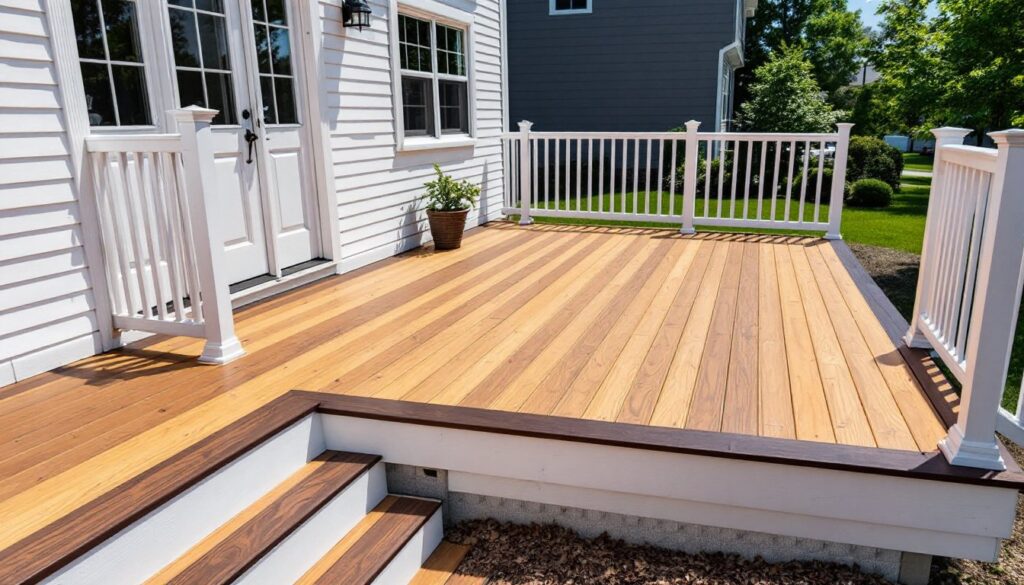
Two-tone staining offers practical and aesthetic advantages that go beyond simple color preference. Visually, contrast creates definition, lighter borders against darker field boards make a deck appear larger and more intentional, similar to how a picture frame highlights artwork. The technique also allows homeowners to work with existing architectural elements: matching railings to trim color, coordinating stair treads with house siding, or linking deck tones to stonework or landscaping.
From a maintenance standpoint, two-tone designs can camouflage uneven wear. High-traffic areas near doorways or grills often fade faster than perimeter boards. Using a darker stain in these zones makes weathering less obvious between refinishing cycles. Some builders also use tone variation to distinguish between different wood species on the same deck, pressure-treated framing lumber versus cedar or composite decking, for example.
Two-tone staining does require more prep and application time than single-color jobs. Painters tape, careful masking, and sequential staining (letting one color dry before applying the second) add labor hours. But, the material cost stays roughly the same, most decks under 400 square feet use one gallon of each stain color, assuming standard transparent or semi-transparent oil-based deck stains that cover 200–350 square feet per gallon depending on wood porosity.
Popular Two-Tone Color Combinations for Decks
Choosing complementary stain colors ensures the finished deck looks intentional rather than mismatched. The most successful combinations balance contrast with harmony, keeping one tone dominant and using the second as an accent.
Light and Dark Wood Contrasts
Classic light-dark pairings mimic natural wood variation and work across architectural styles. A cedar or natural oak tone on field boards paired with dark walnut or espresso on borders and railings creates clean separation without competing colors. This combination suits traditional and craftsman-style homes, where wood grain visibility matters.
For a bolder look, pairing honey or amber stain with charcoal or black produces high contrast. This works particularly well on modern or contemporary homes with clean lines. The lighter tone keeps the deck from feeling cave-like, while the dark accent adds drama. Homeowners should note that darker stains fade faster under UV exposure, so accent areas may need touch-ups every 2–3 years versus 3–4 for lighter zones.
Redwood or mahogany tones combined with lighter cedar or pine shades offer mid-range contrast. This pairing hides tannin bleed and natural color variation in pressure-treated lumber better than extreme light-dark combos.
Gray and Natural Wood Pairings
Gray stains have dominated outdoor finishes over the past decade, and two-tone applications extend their versatility. Driftwood or weathered gray paired with natural or clear-coat cedar gives a coastal, relaxed aesthetic. The gray reads as neutral, letting the natural wood grain provide warmth.
For a modern farmhouse look, charcoal gray on railings and stairs combined with warm brown or tan on deck boards creates contrast without the starkness of black-and-white schemes. This combination complements white or light-colored house siding without blending into it.
Some homeowners use two shades of gray, say, a medium slate gray for field boards and a lighter fog or ash gray for borders. This monochromatic approach adds subtle dimension and works well when the deck color needs to recede visually against bold landscaping or architectural features.
Creative Pattern Ideas for Two-Tone Deck Staining
Beyond simple border-and-field layouts, two-tone staining opens up pattern possibilities that add custom detail without requiring complex carpentry.
Picture-frame borders remain the most popular pattern: field boards in one color with a border of contrasting tone running around the deck perimeter. This works on any deck shape and typically uses 1–3 border boards (actual dimensions 5.5 inches for nominal 2×6 boards). The border visually anchors the deck and provides a stopping point for furniture arrangements.
Alternating board patterns, every third or fifth board stained in a contrasting color, create rhythm and movement. This works best on decks with boards running parallel to the house, where the pattern stays visible from primary viewing angles. Randomizing the spacing prevents the look from feeling too regimented.
Diagonal or herringbone inlays use the deck board layout itself to create contrast. If the deck already features a diagonal board pattern, staining the perimeter frame in a contrasting tone highlights the design. For new decks, laying a section of boards at 45 degrees and staining it differently creates a medallion effect, though this requires additional blocking and increases lumber waste by 10–15%.
Stair and railing contrasts offer the easiest entry into two-tone design. Staining stair treads and risers in alternating colors, or using a darker tone on railings while keeping deck boards lighter, adds dimension without taping off field boards. This approach also allows testing color combinations on a smaller area before committing to the full deck surface.
Zone definition uses color to mark functional areas, a darker dining zone, lighter lounge space, or contrasting stain around built-in planters or hot tub surrounds. This works particularly well on multi-level decks where each tier gets its own tone.
Step-by-Step Guide to Staining Your Deck in Two Tones
Executing a two-tone stain job requires careful prep, precise masking, and patience. Rushing the process leads to bleed-through and uneven color.
1. Clean and prep the surface. Power wash the deck using a 15-degree nozzle tip held 12–18 inches from the wood surface to remove dirt, mildew, and old stain. Let the wood dry completely, at least 48 hours in dry weather, longer in humid climates. Sand rough spots with 80-grit sandpaper and vacuum or blow off dust.
2. Apply wood brightener if needed. Pressure-treated lumber often has mill glaze or tannin stains that prevent even stain absorption. A wood brightener or oxalic acid solution neutralizes discoloration. Follow product instructions and rinse thoroughly.
3. Test stain colors. Apply both stain colors to scrap boards or an inconspicuous deck area (underside of a bench, back of a railing post). Let them dry fully, most oil-based stains take 24–48 hours to show true color. This step prevents costly mistakes.
4. Stain the dominant color first. Apply the color that covers the largest area, usually field boards, using a 4-inch stain pad, roller, or pump sprayer. Work in sections, back-brushing to ensure even penetration and remove puddles. Oil-based stains typically require 24–72 hours to dry depending on temperature and humidity. Don’t tape yet, let the first color cure completely.
5. Mask off borders and patterns. Once the base coat is fully dry, use 2-inch painter’s tape rated for outdoor use to mask edges where the second color will meet the first. Press tape edges firmly to prevent bleed. For intricate patterns, consider using liquid masking film on larger areas.
6. Apply the accent color. Stain the second color carefully, working away from taped edges. A 2-inch angled brush gives better control along borders than pads or rollers. Apply thin, even coats, heavy application increases bleed risk.
7. Remove tape while the stain is tacky. Pull painter’s tape off 30–60 minutes after application, before the stain fully dries. Waiting too long causes the stain to bond to the tape, creating ragged edges when removed. Pull at a 45-degree angle slowly and steadily.
8. Apply a second coat if needed. Semi-transparent stains often require two coats for even color, especially on new wood. Wait the manufacturer’s recommended dry time between coats.
Safety notes: Wear nitrile gloves, safety glasses, and a respirator rated for organic vapors when working with oil-based stains in enclosed or poorly ventilated areas. Keep rags in a metal container with water, oil-soaked rags can spontaneously combust if left wadded up.
Conclusion
Two-tone deck staining transforms standard outdoor spaces into custom features with minimal structural work. Whether using classic light-dark contrasts, modern gray pairings, or creative pattern layouts, the technique adds dimension and defines zones effectively. Success depends on thorough surface prep, patient masking, and allowing adequate dry time between colors. With the right approach, a two-tone deck delivers years of visual interest and stands out as a deliberate design choice rather than basic maintenance.