Wall sconces have evolved far beyond hotel hallways and fancy restaurants. In bedrooms, they’re solving real problems: freeing up nightstand space, providing focused reading light without disturbing a partner, and adding visual interest at eye level where most rooms fall flat. Unlike table lamps that claim valuable surface area or overhead fixtures that cast unflattering shadows, sconces deliver targeted illumination exactly where it’s needed. They also create a layered lighting scheme that makes bedrooms feel intentionally designed rather than just furnished. Whether someone’s working with a cramped rental or planning a full primary suite renovation, the right sconce choices can transform both function and feel.
Key Takeaways
- Bedroom wall sconces solve practical lighting problems by eliminating nightstand clutter, providing ergonomic reading light at shoulder height, and creating layered ambiance without the bulk of floor lamps or overhead fixtures.
- Optimal sconce placement for reading requires mounting 60–72 inches from the floor or 30–36 inches above the mattress when sitting, with 8–12 inches of spacing from the headboard to avoid eye strain.
- Modern sconce styles like swing-arms and linear tube designs work best in contemporary bedrooms, while cage, gooseneck, and brass fixtures suit industrial and vintage aesthetics—match metal finishes across hardware for cohesive design.
- Warm white LED bulbs at 2700K–3000K promote relaxation in bedrooms, with 300–400 lumens ideal for reading and dimmable options allowing transition from task lighting to mood lighting.
- Renters and DIYers can achieve bedroom wall sconce functionality with plug-in fixtures installed in under an hour using wall anchors, while hardwired options require electrical planning and potential permit requirements.
Why Wall Sconces Are Perfect for Bedrooms
Bedroom wall sconces excel where other lighting options fall short. For anyone who reads in bed, they eliminate the neck strain of trying to angle a lamp just right. Mounted 60–72 inches from the floor (measured to the center of the fixture), they position light at shoulder height when sitting up, ideal for books, tablets, or phones.
Space efficiency is another major advantage. In smaller bedrooms where every square inch counts, sconces free up nightstand real estate for essentials like alarm clocks, water glasses, or charging cables. This matters especially in urban apartments or kids’ rooms where furniture needs to multitask.
They also add ambient lighting layers without the commitment of recessed cans or the bulk of floor lamps. A dimmer switch turns functional task lighting into soft mood lighting. Hardwired sconces look cleaner than plug-in options, but require access to wall cavities and often a permit if running new electrical. Many renters or DIYers opt for plug-in sconces with decorative cord covers, these install in under an hour with just wall anchors.
From a design perspective, sconces create symmetry. Flanking a bed with matching fixtures anchors the space and draws the eye upward, making ceilings feel higher. Asymmetrical placements work too, especially in eclectic or modern interiors where intentional imbalance adds interest.
Best Placement Ideas for Bedroom Wall Sconces
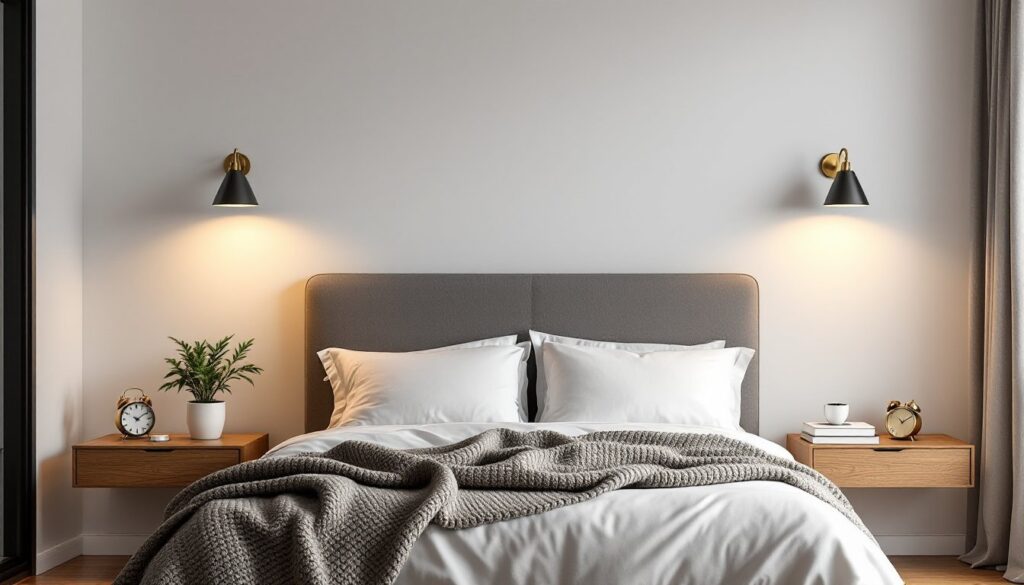
Flanking the bed is the classic move. Position sconces 8–12 inches out from each side of the headboard and 60–66 inches from the floor for reading. If the headboard is tall or upholstered, measure from the top of the mattress instead, aim for about 30–36 inches above that point. This keeps light out of eyes while lying down but accessible when sitting.
Over the headboard works when nightstands aren’t an option. Center a single swing-arm sconce or a pair of small fixtures directly above the pillow area. Keep them at least 6 inches above the headboard to avoid shadows. Swing-arms let users adjust light direction, crucial when one person wants to read and the other wants to sleep.
Accent walls or architectural features benefit from uplights or picture lights. Sconces mounted 12–18 inches from the ceiling can graze textured wallpaper, shiplap, or artwork, adding drama. Use narrow beam angles (25–35 degrees) for focused highlights or wider floods for general wash.
Walk-in closets or dressing areas adjacent to bedrooms often lack adequate task lighting. Vertical sconces flanking a mirror eliminate shadows on the face, and they’re safer than relying on a single overhead bulb when choosing outfit colors.
Spacing from outlets and switches: If hardwiring, plan sconce locations around existing electrical boxes when possible. Running new wire through finished walls typically means cutting drywall, fishing cable, and patching, doable for experienced DIYers but often worth hiring an electrician. Check local codes: bedroom lighting circuits usually fall under NEC requirements, and any work involving junction boxes may need inspection.
Modern and Minimalist Sconce Styles
Swing-arm sconces combine function with clean lines. Look for matte black, brushed brass, or satin nickel finishes. The articulating arm extends 12–18 inches, letting users direct light precisely. Models with in-line switches or dimmers eliminate the need to reach for a wall switch, essential for bedside use.
Linear tube sconces feature exposed LED strips or frosted glass cylinders. These work well in contemporary bedrooms with platform beds and floating nightstands. Vertical orientation (16–24 inches tall) creates height: horizontal mounts (8–12 inches wide) feel more grounded. Keep the profile slim, fixtures deeper than 4 inches jut out awkwardly in narrow spaces.
Orb or globe sconces offer soft, diffused light through opal glass or acrylic shades. They read as sculptural without being fussy, pairing well with midcentury modern or Scandinavian interiors. Sizes range from 6-inch diameter (subtle accent) to 12-inch (statement piece).
Backplate-free designs mount directly to the wall with minimal hardware visible. These ultra-minimal styles suit loft conversions or industrial-chic spaces where exposed brick or concrete provides texture. Installation requires a shallow electrical box, verify wall depth before purchasing.
For renters, plug-in swing-arms with USB ports blend modern convenience with easy installation. Route the cord down behind the headboard and secure with adhesive clips. Pair with smart bulbs for app-based dimming without touching existing wiring.
Vintage and Industrial Bedroom Sconces
Cage sconces mimic old factory lighting with wire or metal grid shades. They suit industrial lofts, farmhouse bedrooms, or spaces with exposed beams. Finishes like oil-rubbed bronze, aged brass, or galvanized steel enhance the vintage vibe. Use Edison-style LED bulbs (they draw 4–6 watts but mimic the warm glow of incandescent filaments) to complete the look without the energy waste.
Gooseneck sconces feature curved arms that arc away from the wall, originally used in barns and workshops. They provide directed light and work well above headboards or in reading nooks. Powder-coated enamel in deep greens, navy, or classic black adds color without feeling trendy.
Brass candlestick or scalloped shades channel 1920s–1940s charm. Unlacquered brass develops a natural patina over time: lacquered finishes stay shiny but require occasional polishing. These pair beautifully with velvet headboards, patterned wallpaper, or vintage nightstands.
Schoolhouse or apothecary glass delivers a retro-yet-timeless feel. Milk glass shades diffuse light gently, reducing glare. Clear glass shows off decorative bulbs but can feel stark in soft bedroom settings, consider frosted or seeded glass for a middle ground.
When mixing vintage sconces into existing décor, match metal finishes to other hardware (drawer pulls, curtain rods, bed frames). Mismatched metals can work in eclectic spaces, but keep the style consistent, industrial with industrial, Art Deco with Art Deco.
Creative Sconce Ideas for Different Bedroom Styles
Bohemian bedrooms benefit from woven rattan or macramé sconces. These add texture and warmth, complementing layered textiles and plants. Plug-in options exist, but hardwired versions with hidden cords look cleaner. Pair with warm white LEDs (2700K) to enhance the cozy, earthy palette.
Coastal or beach-themed rooms work well with rope-wrapped sconces, driftwood accents, or fixtures in weathered white or seafoam finishes. Avoid anything too nautical (ship wheels, anchors), it tips into theme-park territory fast. Subtle nods like linen shades or sand-colored ceramics feel more sophisticated.
Scandinavian or hygge-inspired spaces call for simple ceramic or wood sconces with minimal embellishment. Look for matte finishes, natural linen shades, or bent plywood arms. Keep the palette neutral, white, gray, blond wood, and let the light itself create warmth.
Glam or Hollywood Regency bedrooms demand statement pieces: crystal sconces, polished chrome with geometric backplates, or Art Deco sunburst designs. These catch and reflect light, amplifying the room’s sparkle. Balance bold fixtures with restrained wall colors to avoid visual overload.
Rustic or cabin-style rooms suit antler sconces, hammered copper, or wrought iron with candelabra bulbs. If going the antler route, choose resin replicas, they’re lighter, easier to mount, and skip the ethical questions. Pair with reclaimed wood headboards or stone accent walls for cohesion.
Choosing the Right Bulb and Light Temperature
Color temperature dramatically affects bedroom mood. Warm white LEDs (2700K–3000K) mimic incandescent bulbs and promote relaxation, ideal for winding down before sleep. Cool white or daylight (4000K+) feels clinical in bedrooms: reserve those for closets or task areas.
Lumens, not watts, measure brightness. For bedside reading, aim for 300–400 lumens per sconce. If the sconce is purely decorative or ambient, 150–200 lumens suffices. Dimmable LEDs offer flexibility, bright enough for reading, soft enough for mood lighting. Verify compatibility with existing dimmer switches: not all LEDs dim smoothly, and some buzz or flicker with older dimmers.
Bulb shape matters. Exposed-bulb sconces show off the filament, use A19, G25 globe, or T10 tubular bulbs depending on the fixture’s aesthetic. Shaded sconces hide the bulb, so standard A19s work fine. Check the fixture’s maximum wattage rating: exceeding it risks overheating, especially in enclosed fixtures.
CRI (Color Rendering Index) above 90 ensures colors look accurate, important in dressing areas. Budget LEDs often score 80–85, which is adequate but not ideal for applying makeup or matching clothing.
For smart home enthusiasts, smart bulbs with adjustable color temperature and brightness integrate with voice assistants or apps. Philips Hue, LIFX, and Wyze all make sconce-compatible options. Just confirm the bulb fits the fixture’s size and power limits before buying.
Conclusion
Bedroom wall sconces deliver far more than light, they solve spatial problems, layer visual interest, and support how people actually use their bedrooms. Whether someone’s installing hardwired swing-arms beside a custom headboard or clamping plug-in cages onto a rental’s drywall, the right fixtures make the space work harder and look sharper. Start with function (reading, ambiance, accent), then choose style and placement to match. Don’t skip the dimmer.